We may earn a commission when you book through links on this page, at no extra cost to you. Read our affiliate disclosure.
- Population
- About 5.4 million
- UNESCO sites
- Eight
- Highest peak
- Gerlachovský štít, 2,655 m
- National dish
- Bryndzové halušky
Diesen Reiseführer auf Deutsch lesen
Przeczytaj ten przewodnik po polsku
Přečtěte si tohoto průvodce česky
Olvassa el ezt az útmutatót magyarul
Slovakia is best known for the High Tatras mountains, castles, caves, thermal spas, wooden churches, car production and bryndzové halušky, the national dish of sheep-cheese dumplings. This Central European country of about 5.4 million people has eight UNESCO World Heritage Sites and makes more cars per head than any other country.
That car output earns it the nickname "European Detroit". This guide lists what Slovakia is known for, with links to where to see each one. For planning, start with a 7-day Slovakia itinerary.
Some links are affiliate links. Taply may earn a commission at no extra cost to you.
Top picks at a glance
Key takeaways
- Mountains, castles and caves are the main reasons to visit.
- Slovakia has eight UNESCO World Heritage Sites.
- It is the world's largest car producer per capita.
- Food is hearty: sheep cheese, dumplings, soups and local beer and wine.
Best ways to experience what Slovakia is famous for, ranked
Ranked by how well each option fits this trip: convenience, cost and who it suits. Some options are affiliate partners. How we rank
-
Our top pick1
Tours and activities on Klook
Best overallBest for: First-timers
Klook lists tours in Bratislava and other parts of Slovakia, from city walks to day trips. Check current options and availability.
See tours on Klook Read our Klook review- Wide choice
- Easy booking
- Fixed schedule
-
2
Audio tours on WeGoTrip
Best for historyBest for: Culture lovers
Audio tours explain the history of the sights you walk past, which suits Slovakia's layered past.
See audio tours on WeGoTrip Read our WeGoTrip review- Own pace
- Historical detail
- Headphones needed
-
3
Attraction tickets on Tiqets
Best for ticketsBest for: Planners
Tiqets may list tickets for castles and attractions. Availability varies, so check current listings.
See tickets on Tiqets Read our Tiqets review- Mobile tickets
- Limited selection
-
4
Car rental with Qeeq
Best for castles and mountainsBest for: Road trippers
A car reaches castles, caves and trailheads that trains do not. Compare conditions and insurance carefully.
Compare cars on QEEQ Read our QEEQ review- Flexible
- Reaches remote places
- Parking and fuel costs
-
5
Slovak trains and buses
CheapestBest for: Budget travellers
Trains link the main cities and the Tatras. See the train guide before you go.
Official website- Low cost
- Scenic
- Slow on some routes
What Slovakia is known for at a glance
| Famous for | Why | Where to see it |
|---|---|---|
| High Tatras | Highest range in the Carpathians, peaks over 2,500 m | Štrbské Pleso, Tatranská Lomnica |
| Castles | One of the densest collections in Europe | Bratislava, Spiš, Orava, Bojnice |
| Caves | Large cave system in the Slovak Karst | Slovak Karst, Demänovská |
| UNESCO sites | Eight World Heritage Sites | Banská Štiavnica, Levoča, Vlkolínec, Bardejov |
| Wooden churches | Rare timber architecture | North and east |
| Thermal spas | Hot springs and treatments | Piešťany, Bešeňová |
| Bryndzové halušky | The national dish, dumplings with sheep cheese | Pubs and restaurants everywhere |
| Cars | More cars per head than any other country | Factories near Bratislava, Trnava and Žilina |
| Ice hockey | The national sport, world champions in 2002 | Arenas in the big cities |
| Folk culture | Costumes, music and wooden villages | Čičmany, Vlkolínec, folk festivals |
Each of these has its own section below, with links to plan a visit.
The High Tatras
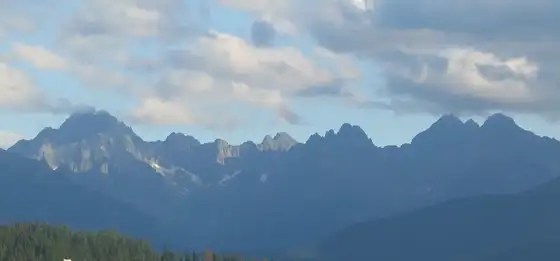
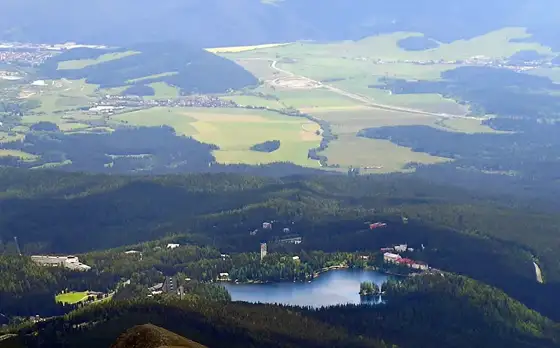
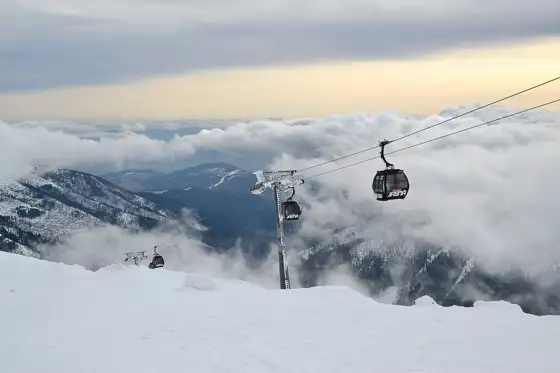
The Tatras are the highest range in the Carpathians. The highest peak, Gerlachovský štít, is 2,655 m, and the range has dozens of peaks over 2,500 m. The Slovak side is the most visited, with lakes, alpine trails and ski resorts such as Štrbské Pleso and Tatranská Lomnica. See the High Tatras guide and best hikes.
Castles and ruins
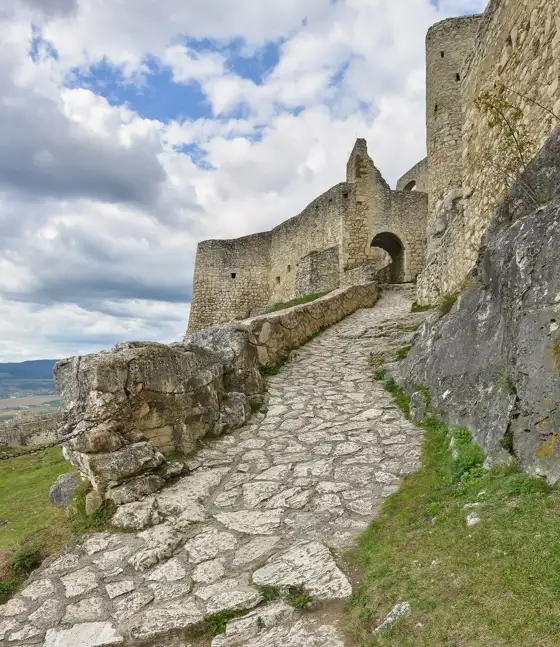
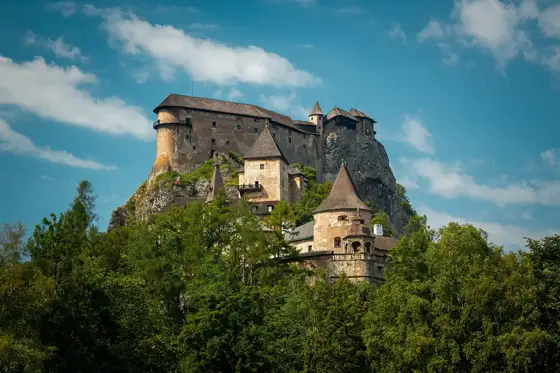
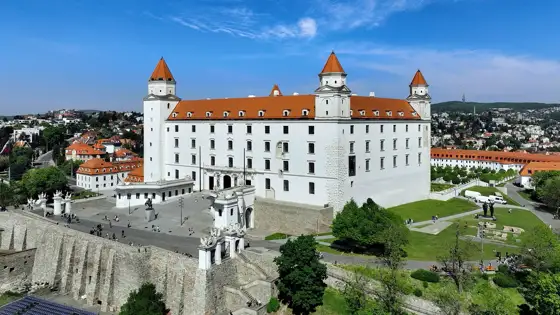
Slovakia has a long list of castles and ruins, from Bratislava Castle to the huge Spiš Castle, a UNESCO site. Many sit on hilltops and can be visited in a day. See castles in Slovakia and castles without a car.
Cars, history and people
Slovakia produced about 1.08 million cars in 2023, and the car industry is a large share of industrial output. It is also known for the Great Moravian Empire, which Saints Cyril and Methodius reached in 863, and for the folk hero Juraj Jánošík. Slovak inventors include Štefan Banič, who patented a parachute. See Slovak history for travellers.
UNESCO sites, caves and nature
The eight World Heritage Sites include Banská Štiavnica, Levoča with Spiš Castle, the village of Vlkolínec, Bardejov, the wooden churches, the caves of the Slovak Karst, the Carpathian beech forests and the Danube Limes. See UNESCO sites in Slovakia, caves and national parks.
Food, beer and wine
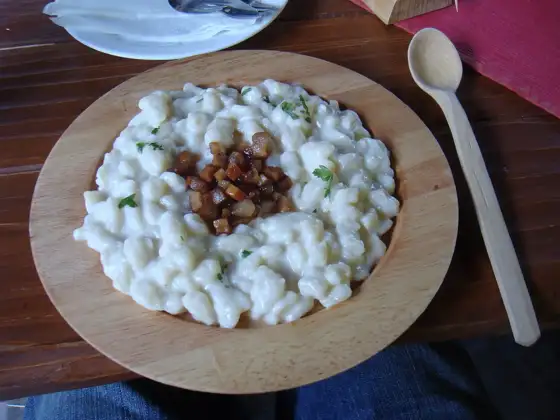
Bryndzové halušky are small potato dumplings with sheep cheese and bacon. Other classics are kapustnica (cabbage soup), pirohy and fried cheese. Slovakia also makes beer and wine, with small wine regions near Bratislava. See Slovak food to try, the beer guide and wine regions.
Where is Slovakia and how big is it?
Slovakia is a landlocked country in Central Europe. It borders the Czech Republic, Poland, Ukraine, Hungary and Austria, and its capital, Bratislava, lies in the far west, close to both Vienna and Budapest. The country covers about 49,000 square kilometres and has about 5.4 million people, so it is small enough to cross in a day.
- Joined: the EU in 2004. It has used the euro since 2009.
- Landscape: mountains in the north and centre, lowlands and vineyards in the south and west.
- Largest cities: Bratislava and Košice, see Košice.
Slovakia was part of Czechoslovakia until the end of 1992, and became independent on 1 January 1993. See Czechoslovakia and Slovakia vs the Czech Republic for how the two countries differ today. Another common comparison is Slovakia vs Slovenia, two very different countries with similar names.
Spas, folk culture and sport
Spa towns such as Piešťany draw visitors for thermal water and treatments. Folk traditions include costumes, music and wooden architecture. Ice hockey is the national sport and the country won the world championship in 2002. See thermal spas and Slovak folk culture.
Why these things matter for a visit
Most of what Slovakia is famous for can be seen without huge crowds. The mountains are real alpine terrain, not a theme park, and you can find a quiet trail even in summer. Castles are often in ruins and can be explored freely, which feels different from heavily restored sights elsewhere. The country is compact, so you can combine a city, a castle and a mountain in one week, see a 5-day itinerary and a 3-day plan.
Lesser-known facts
Slovakia has a dense scatter of castles, ruins and manor houses for a small country. Its capital, Bratislava, is the only national capital that borders two other countries, Austria and Hungary, and lies about 50 km from Vienna. The Venus of Moravany, a small figure carved from mammoth ivory and dated to around 22,800 BC, was found in Slovakia. The Tatra National Park was set up as a cross-border park with Poland, and the country has notable ice caves such as Dobšiná. See Dobšiná Ice Cave.
What visitors often overlook
Many people know Bratislava or the Tatras, but not the east. Košice, Levoča and Bardejov have beautiful old centres, and the east has wooden churches and national parks. See Košice and wooden churches of Slovakia. Spas and local wine are also under the radar, and most visitors find prices friendly. Use the trip planner to combine these.
What are Slovaks known for?
People often ask what Slovaks themselves are known for, and the honest answer is a mix of traditions and national pride. Slovaks are known for:
- Hospitality: guests are usually offered food, coffee or a small glass of spirit.
- Ice hockey: it is the national sport, and the 2002 world title is still a source of pride.
- Folk culture: costumes, songs and wooden architecture, especially in villages in the north and east.
- Inventors: Štefan Banič patented a parachute, and Slovak engineers work in the large car plants.
- Hiking: weekends in the mountains are a normal habit for many families.
Is Slovakia famous for anything outside Europe? Not as much as Prague or Vienna, which is why many visitors say it feels like a country still to be discovered. See is Slovakia worth visiting and Slovak folk culture.
Famous dishes and drinks to try first
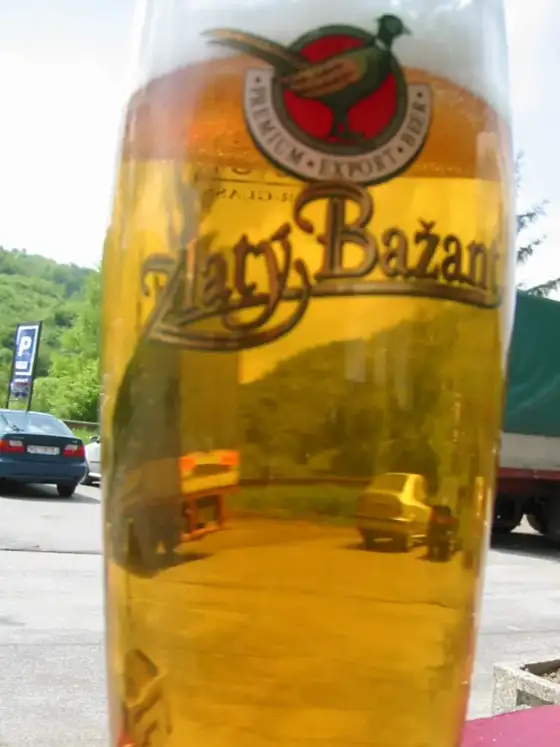
Start with bryndzové halušky, then try kapustnica, a thick sour cabbage soup that appears at Christmas, and pirohy filled with cheese or potatoes. Fried cheese (vyprážaný syr) with tartar sauce is a pub classic. For drinks, local beer is cheap and good, and Kofola is a cola-style soft drink that many Slovaks prefer to the global brands. Sweet and strong spirits such as slivovica and borovička are also well known. Drink responsibly and note that drinking rules apply. See Slovak food to try and vegetarian food in Slovakia. The soup's place at the Slovak Christmas Eve dinner is explained on its own page.
Famous places by region
West: Bratislava, the Little Carpathians wine route and castles near the capital, see castles near Bratislava. Centre: Banská Štiavnica, Bojnice and the Low Tatras. North: the High Tatras, Orava Castle and Žilina. East: Košice, Levoča, Spiš Castle and Bardejov. South: Danube wine villages and thermal baths. This regional view makes it easier to pick a base for a trip.
How to turn the list into a trip
Pick one mountain, one castle, one city and one food experience, and the trip builds itself. A first visit could combine Bratislava Castle, a day on the Tatras trails, an evening of halušky and a stop at a spa. Use the castle finder and the High Tatras hike finder to match places to your fitness and time. Trains link most of these places, though a car saves time at castles and caves, see a Slovakia road trip.
Famous does not mean crowded. Outside July and August, the major sights are calm, and lesser-known places such as Vlkolínec and Čičmany are nearly empty on weekdays. See Vlkolínec and Čičmany.
Frequently asked questions
What is Slovakia best known for?
Slovakia is best known for the High Tatras, castles, caves, spas and hearty food such as bryndzové halušky.
What is the national dish of Slovakia?
Bryndzové halušky: small potato dumplings with sheep cheese and bacon.
Is Slovakia famous for cars?
Yes. It produces more cars per capita than any other country and is nicknamed the European Detroit.
How many UNESCO sites are in Slovakia?
Slovakia has eight World Heritage Sites, six cultural and two natural.
What is the highest mountain in Slovakia?
Gerlachovský štít in the High Tatras, at 2,655 m.
What is Slovakia known for in sport?
Ice hockey is the most popular sport, and Slovakia won the world championship in 2002.
What are Slovaks known for?
Slovaks are known for hospitality, a passion for ice hockey, living folk traditions and weekend hiking in the mountains. The country is also known for its engineers and inventors, such as Štefan Banič, who patented a parachute, and for skilled workers in the large car factories that make Slovakia the leader in cars per capita.
Is Slovakia famous for anything?
Yes. Slovakia is famous for the High Tatras, one of the densest collections of castles in Europe, thermal spas, wooden churches and car production. It makes more cars per head than any other country, and it has eight UNESCO World Heritage Sites. Food fans know it for bryndzové halušky, the sheep-cheese dumplings.
Where is Slovakia?
Slovakia is in Central Europe and borders the Czech Republic, Poland, Ukraine, Hungary and Austria. It has no coast. The capital, Bratislava, sits in the far west on the Danube, about 50 km from Vienna and roughly 200 km from Budapest, which makes it easy to combine with a trip to either city.
What is the population of Slovakia?
About 5.4 million people live in Slovakia, which covers roughly 49,000 square kilometres. Bratislava is the capital and largest city, with about 480,000 residents, and Košice in the east is the second largest. Most people live in towns and cities, but the mountains and villages in the north and east are sparsely populated.
What is Slovakia famous for in the world?
Slovakia is famous worldwide for its car industry, which makes more cars per head than any other country, and for the High Tatras mountains. Travellers also know it for castles, caves, thermal spas, eight UNESCO sites and bryndzové halušky.
What is Slovakia famous for food and drink?
Slovakia is famous for bryndzové halušky, potato dumplings with sheep cheese and bacon. Other classics are kapustnica cabbage soup, pirohy and fried cheese, plus local beer, wine, Kofola and spirits such as borovička and slivovica.
What is Slovakia known for historically?
Slovakia is known historically for the Great Moravian Empire, which Saints Cyril and Methodius reached in 863, for the folk hero Juraj Jánošík, and for its castles. It was part of Czechoslovakia until 1992 and became independent on 1 January 1993.
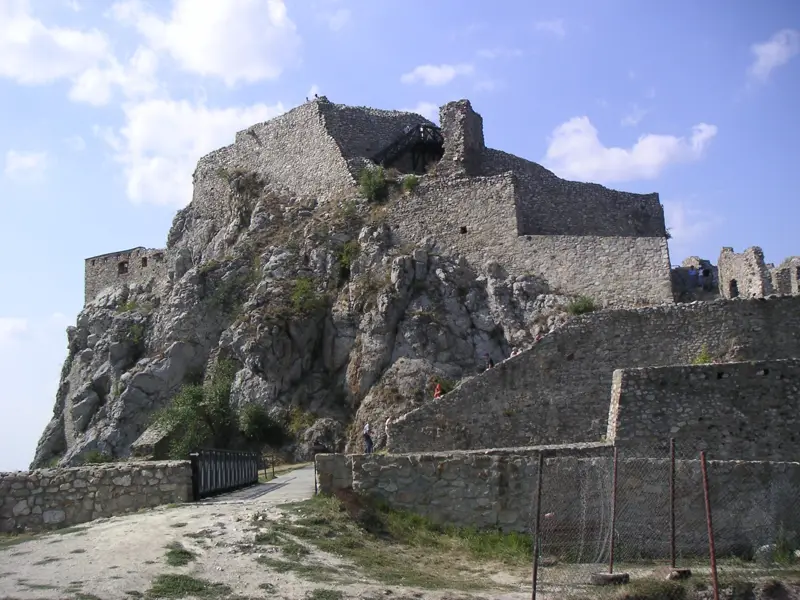
Photo: Devín Castle · Unknown · CC BY-SA 3.0