We may earn a commission when you book through links on this page, at no extra cost to you. Learn more.
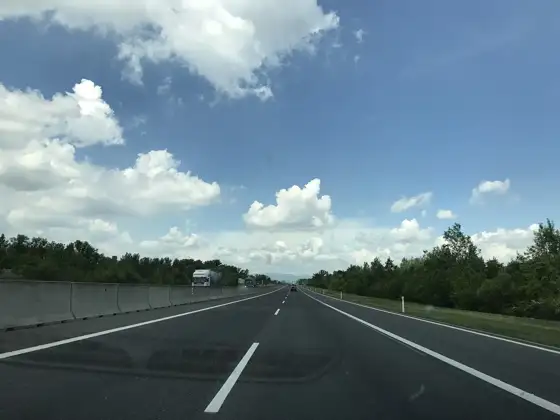
The most practical way to reach Banská Štiavnica is by rental car, and Economybookings is a good place to compare prices before you travel. The town sits in the hills of central Slovakia, and public transport is slower and less frequent than in the big cities.
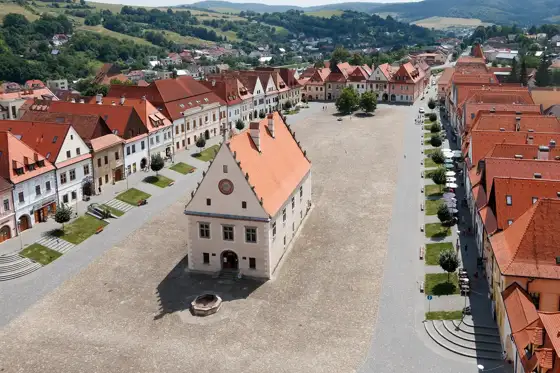
Banská Štiavnica is a UNESCO World Heritage site, built on silver and gold mining that once made it one of the richest towns in the Kingdom of Hungary. Steep streets, two castles, a mining museum and a landscape of old mining lakes make it one of the most distinctive places in the country.
Plan a night or two here. This guide covers how to get there, what to see and when to go.
Top picks at a glance
Key takeaways
- Banská Štiavnica is roughly 2 to 2.5 hours from Bratislava by car.
- The town is built on steep hills, so pack comfortable shoes.
- Highlights include the Old Castle, the New Castle, the Calvary and the mining museums.
- A full day is possible, but one overnight stay is better for a relaxed visit.
Best ways to get to Banská Štiavnica, ranked
-
Our top pick1
Rental car with Economybookings
Best overallBest for: Road trippers and groups
Economybookings compares rental offers from many suppliers, which helps when you want a car for several days. A car lets you combine the town with nearby sights such as Kremnica, Bojnice and the old mining lakes. Check insurance, deposit and mileage conditions before you pay.
Compare cars on Economybookings- Flexible stops on the way
- Easy to link with other central Slovakia towns
- Compare many suppliers at once
- Steep narrow streets and tricky parking in the centre
- More expensive for solo travellers
-
2
Private transfer with Kiwitaxi
Most convenientBest for: Short stays without a car
Kiwitaxi offers private transfers between cities, which can save you the awkward connections to a small town. Check the current price from Bratislava or Vienna before you book.
Book a transfer on Kiwitaxi- Direct, no changes
- Fixed price in advance
- Good for families with luggage
- Higher cost than public transport
- One way only unless you book a return
-
3
Train and regional bus
CheapestBest for: Budget travellers with time
You can reach the town by combining a main line train with a change onto the branch line from Hronská Dúbrava or a regional bus. The branch line station sits a few kilometres below the centre. The journey takes longer than driving and needs planning, but the fares are low. Check the timetable on the day before you leave, since services thin out on weekends.
Official website- Very cheap
- No driving needed
- Slow, with at least one change
- Limited evening services
-
4
Guided day tour with Klook
Easiest without a carBest for: Day trippers
Klook lists tours across Europe. Look for guided day trips to central Slovakia from Bratislava or Vienna, and check that the itinerary includes enough time in the town itself.
See tours on Klook- No planning
- Guide covers the mining history
- Short time on site
- Availability varies by season
Getting there from Bratislava and beyond
By car, the route from Bratislava runs through Nitra or along the expressway towards Zvolen, and takes about 2 to 2.5 hours depending on the road. From the High Tatras it is roughly 3 hours. If you are driving, read driving in Slovakia for the vignette, speed limits and parking rules.
Public transport works, but it needs a change. Check the timetable in advance and allow extra time for the final leg.
What to see in the town
The historic centre is spread across steep slopes, so the best approach is to walk the main loop and then add the extras.
- Old Castle, a fortified Renaissance building that now houses a museum.
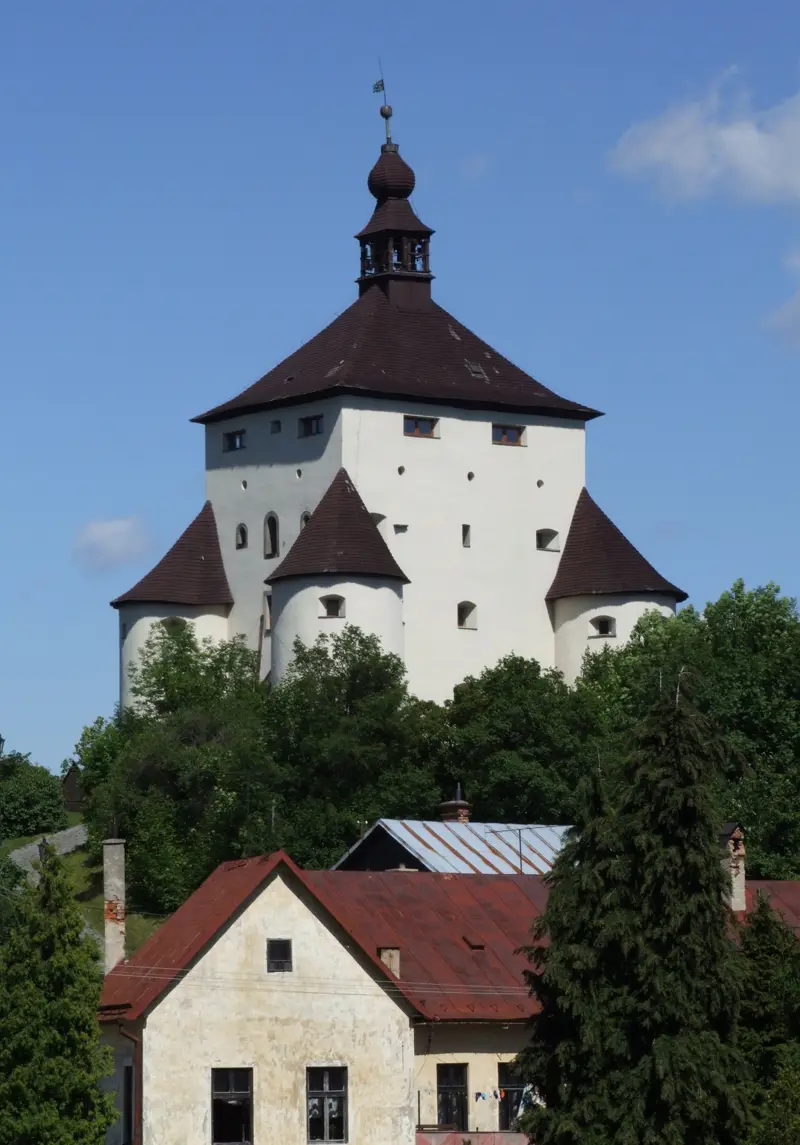
- New Castle, a white tower on a hill that was built as a lookout against the Ottoman Empire.
- Holy Trinity Square with the plague column and the town hall.
- The Calvary, a hillside complex of churches and chapels with views over the roofs.
- The Slovak Mining Museum, which includes underground tours.
Allow a full day to see most of this, or two half days with a night in between.
Mining lakes and the surrounding hills
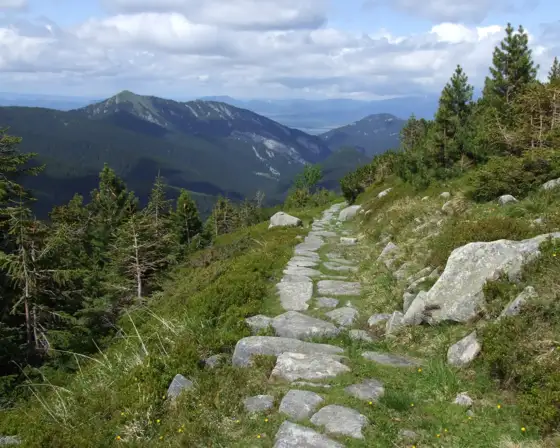
Around the town there are dozens of tajchy, artificial lakes built to power the mines. Some are used for swimming in summer, and others are good for walks and photos. Paths link them through forest, so a few hours on foot is easy to arrange.
The nearby town of Kremnica, known for its mint and gold history, makes a good add-on. Bojnice Castle is also in range, see Bojnice Castle for the details.
When to go
Late spring and early autumn are the most comfortable seasons, with mild weather and fewer crowds. Summer brings festivals and warm days for the lakes. Winter is cold and the steep streets can be icy, but the town looks atmospheric under snow and it is quiet. See best time to visit Slovakia for the wider picture.
Where to stay and practical tips
The old town has small guesthouses and pensions, and many are in historic buildings. Book early for summer weekends. Cars are best parked at the edge of the centre, since the streets are narrow.
- Wear shoes with grip, since the cobbles are steep and uneven.
- Check opening times for museums, as they change by season.
- Cards work in most places, but carry some cash for small cafes.
Planning a two day stay
If you have two days, use the first for the old town and the second for the surroundings. Start with the Old Castle and the town square in the morning, then take the climb to the Calvary for views in the late afternoon. Leave the second day for a mining museum tour, a walk to one of the lakes and a drive to Kremnica or Sitno hill, which has a broad view over the region.
Restaurants in the centre often close early on weekdays outside summer, so check the hours and book ahead for dinner. The local cuisine is hearty, with game, soups and potato dishes, and several pensions serve breakfast with local products. If you drive, ask your guesthouse where to park, as some streets are closed to cars or very narrow.
Frequently asked questions
Is Banská Štiavnica worth visiting?
Yes. It is a UNESCO listed mining town with two castles, museums and a hilly landscape, and it feels quite different from Bratislava or the Tatras.
How far is Banská Štiavnica from Bratislava?
About 2 to 2.5 hours by car, depending on the route and traffic.
Can you visit Banská Štiavnica in a day?
A day trip is possible with a car, but staying one night gives you time for the museums, the Calvary and a walk by the lakes.
Is there a train to Banská Štiavnica?
A regional line serves the area, but most visitors need to combine it with a bus or a change. Check the current timetable before you travel.
What is Banská Štiavnica famous for?
Its silver and gold mining history, the UNESCO listed old town and the artificial mining lakes.
Photo: Banská Štiavnica · Pudelek (Marcin Szala) · CC BY-SA 3.0