We may earn a commission when you book through links on this page, at no extra cost to you. Read our affiliate disclosure.
- UNESCO listing
- 2008
- Buildings
- Nine (churches and a belfry)
- Traditions
- Catholic, Protestant, Greek Catholic
- Best way
- By car, villages are spread out
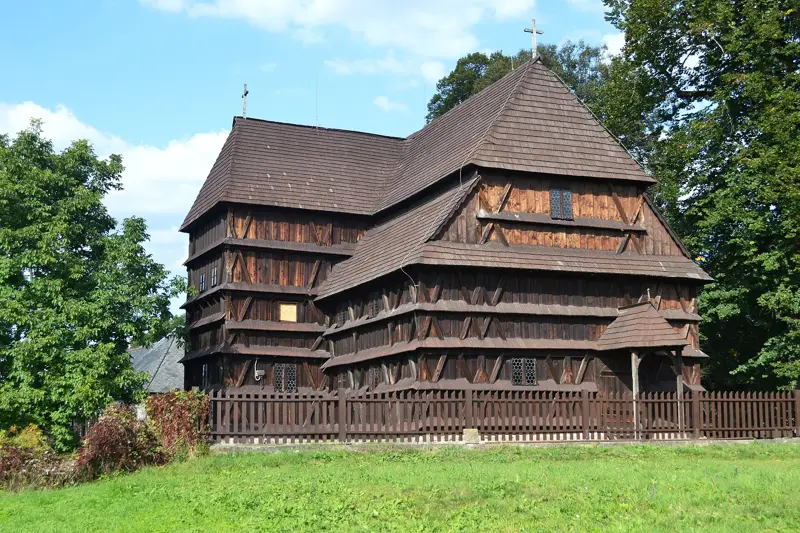
The best way to see the UNESCO wooden churches of Slovakia is by rental car, and Economybookings is one place to compare offers. The listing, added in 2008, covers nine buildings in northern and eastern Slovakia, spread across three Christian traditions.
The group is not one cluster. Kežmarok and Tvrdošín are on the road from the High Tatras to Orava, while Bodružal, Ladomirová and Ruská Bystrá lie in the far northeast, and Hronsek is near Banská Bystrica. Visits usually need a car or a tour, and many churches have limited opening hours.
Top picks at a glance
Key takeaways
- The nine buildings were listed by UNESCO in 2008.
- They represent Roman Catholic, Protestant (articular) and Greek Catholic traditions.
- Several are small village churches, so opening times are limited. Check ahead.
- Kežmarok is the easiest to reach, as it is a town near the High Tatras.
Best ways to visit the wooden churches, ranked
-
Our top pick1
Rental car with Economybookings
Best overallBest for: Church and architecture fans
The churches are in villages away from rail lines, so a car is the most flexible. Economybookings compares car hire offers, so check the deposit and insurance cover.
Compare cars on Economybookings- Reach remote churches
- Fits several stops in one day
- Rental cost
- Narrow roads in some villages
-
2
Rental car with Auto Europe
Alternative car optionBest for: Road trippers
Auto Europe is another broker. Compare the same dates to see which supplier and terms suit your trip.
Compare cars on Auto Europe- Wide supplier choice
- Compare one-way fees
-
3
Private transfer with GetTransfer
Flexible quotesBest for: Groups without a car
GetTransfer lets you request offers from drivers. Ask for a route with several village stops and confirm waiting time.
Get offers on GetTransfer- No driving
- Fixed price
- Waiting time can add cost
-
4
Guided tours with Klook
Best for guided visitsBest for: Visitors who prefer a guide
Klook lists tours across Europe, though a dedicated wooden churches tour is not guaranteed. Check what is on sale for your dates.
See tours on Klook- Local context
- Limited availability
-
5
Bus and train to Kežmarok and Tvrdošín
CheapestBest for: Budget travellers
Kežmarok and Tvrdošín are towns with public transport. The smaller village churches are much harder without a car.
Official website- Low fares
- Villages are hard to reach
The nine buildings
| Village or town | Tradition | Date |
|---|---|---|
| Hervartov, St Francis of Assisi | Roman Catholic | 15th century |
| Tvrdošín, All Saints | Roman Catholic | 15th century |
| Kežmarok, articular church | Protestant | 1717 |
| Leštiny, articular church | Protestant | 1688 |
| Hronsek, articular church and belfry | Protestant | 1726 |
| Bodružal, St Nicholas | Greek Catholic | 1658 |
| Ladomirová, St Michael | Greek Catholic | 1742 |
| Ruská Bystrá, St Nicholas | Greek Catholic | 18th century |
The Hronsek church and belfry count as two of the nine buildings. Dates follow Wikipedia, so check the local site for details.
Articular churches
The Protestant churches at Kežmarok, Leštiny and Hronsek are called articular churches, a name that comes from the legal articles under which Protestants were allowed to build. The Hronsek church is described as built in a single year without metal parts such as nails, and it holds around 1,100 worshippers. The Kežmarok church is large enough for more than 1,500. The Leštiny church is linked to the poet Pavol Országh Hviezdoslav, who was baptised there. Kežmarok lies close to Poprad and the High Tatras.
Greek Catholic churches
Bodružal, Ladomirová and Ruská Bystrá lie in the northeast, and show the Carpathian wooden building tradition with towers and layered roofs. Bodružal is described as being in three connected parts, and the Ladomirová church as built without a single nail. They are within reach of Bardejov, which is a good base and a UNESCO town.
Their interiors often hold painted iconostases, the image screens typical of Eastern rite worship, so a visit shows a different tradition from the Catholic and Protestant churches elsewhere in the group. Check whether a guide or caretaker can open the door before you set out.
Practical visiting
- Interiors are often open only at set times or by arrangement. Check local websites or the parish.
- These are active places of worship, so dress modestly and keep quiet during services.
- Roads to the smaller villages can be narrow. See driving in Slovakia.
- Bring a little cash for any small donation or entry fee.
Ask before taking photographs inside, especially during a service or if a caretaker is present. Exterior photos are usually fine and best in soft morning or evening light. Do not enter roped off areas, and keep to marked paths around the building, as the timber is old and sensitive to weather and wear.
Sample routes
North: Poprad, Kežmarok, Hervartov, then on to Orava Castle and Tvrdošín. Northeast: Bardejov, Bodružal, Ladomirová and Ruská Bystrá in a half day, if opening times work. Central: Banská Štiavnica and Hronsek in one trip. Link them to other sites using UNESCO sites in Slovakia and Slovak folk culture.
Late spring to early autumn gives the best road conditions and the most chances of interior access. Winter visits are possible for exteriors, but heating is rare and some churches are locked. See best time to visit Slovakia for seasonal planning, and check the local parish or municipal website for opening hours.
Why wood, and why these churches
Timber building was a normal local tradition in the Carpathians, where wood was plentiful. The listed group is chosen to show different faiths and building styles, from the Gothic influence in the Catholic churches to the very large Protestant halls and the towered Greek Catholic churches. The Protestant buildings were built under legal limits, which explains their simple outer appearance and large interiors. The point of the UNESCO listing is the range of the group, not any single building.
Frequently asked questions
How many wooden churches are UNESCO listed in Slovakia?
Nine buildings: eight churches and one belfry, listed in 2008 as the Wooden Churches of the Slovak part of the Carpathian Mountain Area.
Which wooden church is easiest to visit?
Kežmarok, because it is a town with public transport near the High Tatras.
Are the churches open to visitors?
Often with limited hours. Check locally before you travel.
Were the churches built without nails?
Wikipedia describes the Hronsek and Ladomirová churches as built without nails or metal parts.
Can I see them without a car?
Kežmarok and Tvrdošín are possible by bus or train. The village churches are much easier with a car or tour.
Photo: Wooden Churches of the Slovak part of the Carpathian Mountain Area · Ladislav Luppa · CC BY-SA 4.0