We may earn a commission when you book through links on this page, at no extra cost to you. Read our affiliate disclosure.
- Location
- Oravský Podzámok, northern Slovakia
- Built
- From the 13th century, current form by 1611
- Best for
- History, photography, Nosferatu fans
- Time needed
- Half a day with the village below
Diesen Reiseführer auf Deutsch lesen
Przeczytaj ten przewodnik po polsku
Přečtěte si tohoto průvodce česky
Olvassa el ezt az útmutatót magyarul
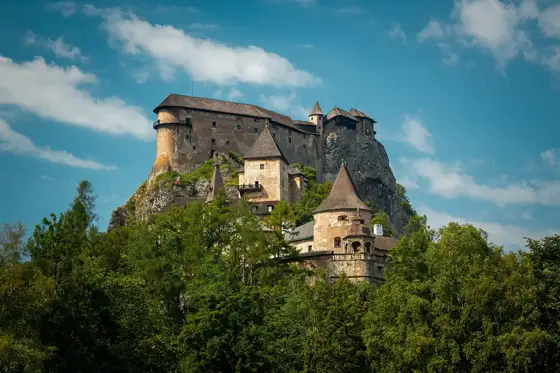
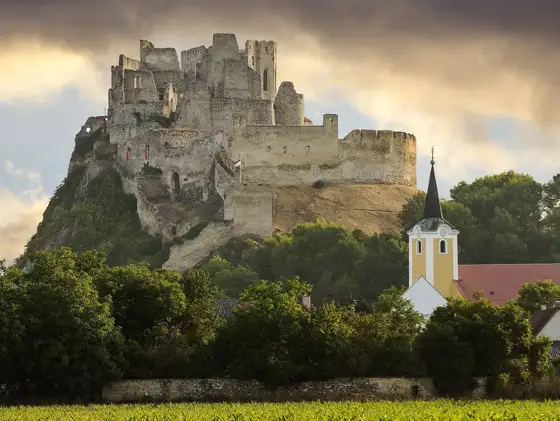
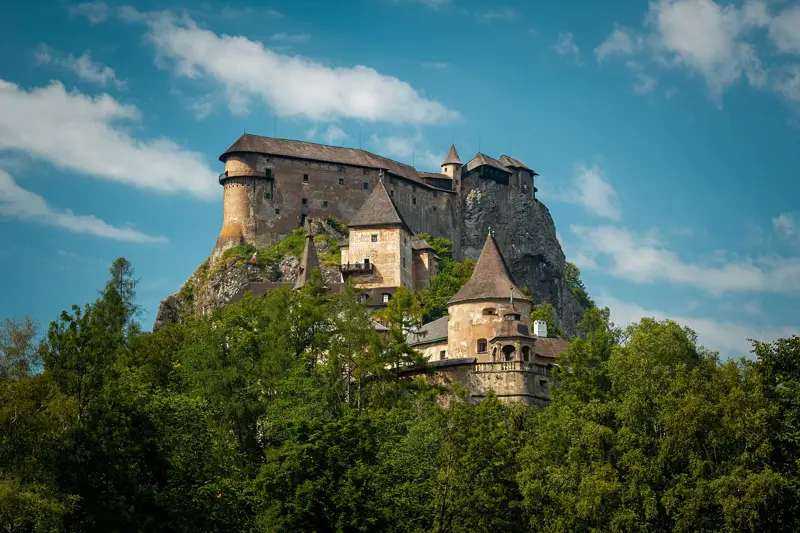
Orava Castle is a cliff-top castle in the village of Oravský Podzámok in northern Slovakia, first built in the 13th century and nicknamed Slovakia's Dracula castle because scenes of the 1922 film Nosferatu were shot there. It has no link to the historical Vlad the Impaler, and it stands on a limestone cliff above the Orava River.
The easiest way to reach it is by rental car, and QEEQ is a good place to compare offers. A car lets you pair the castle with other sights in northern Slovakia on the same day. Its stacked courtyards and towers follow the shape of the rock, and it is one of the best known castles in the country.
This guide covers the history, how to get there, what to expect inside and how to fit the castle into a trip with the Malá Fatra, Žilina or the High Tatras.
Top picks at a glance
Key takeaways
- The castle dates from the 13th century and reached its present form by 1611.
- It houses the Orava Museum, founded in 1868.
- A car is the simplest way to reach it, but trains and buses also serve the area.
- Plan half a day, and check the official museum site for current opening hours.
Best ways to get to Orava Castle, ranked
Ranked by how well each option fits this trip: convenience, cost and who it suits. Some options are affiliate partners. How we rank
-
Our top pick1
Rental car with QEEQ
Best overallBest for: Independent travellers and small groups
The castle sits in a rural part of the country, so a car saves a lot of waiting between connections. You can visit the castle in the morning and move on to Žilina, Malá Fatra or the Tatras in the afternoon. QEEQ lets you compare car hire offers, so check the deposit, insurance cover and fuel policy before you book.
Compare cars on QEEQ Read our QEEQ review- Your own schedule
- Easy to combine with nearby sights
- No timetable to plan around
- Rental cost and deposit
- Parking can fill up in season
-
2
Private transfer with Kiwitaxi
Most comfortableBest for: Families and groups
Kiwitaxi arranges private transfers between cities and towns. If you want a driver from Žilina, Poprad or Kraków, request a quote for your route and ask whether the driver can wait while you visit. Prices vary, so check the current offer.
Book a transfer on Kiwitaxi Read our Kiwitaxi review- No driving
- Price agreed in advance
- Costs more than public transport
- Ask whether waiting time is included
-
3
Guided tours on Klook
Best for guided visitsBest for: Visitors who prefer a guide
Klook lists guided day tours across Europe. Check whether an Orava or northern Slovakia tour is available for your dates and what the price includes before booking.
See tours on Klook Read our Klook review- Context from a guide
- Planning done for you
- Availability varies by date
- Fixed schedule
-
4
Travel insurance with EKTA
Cover for hiking and tripsBest for: Hikers and road trippers
If your trip includes hiking in the Malá Fatra or the Tatras, travel insurance is worth sorting out before departure. EKTA sells travel cover, so compare what it includes for outdoor activities.
Official website Read our EKTA review- Cover set up before you leave
- Check that your activity is covered
-
5
Train and bus (ZSSK)
CheapestBest for: Budget travellers with time
Oravský Podzámok has a railway station on the regional line, and buses connect nearby towns such as Dolný Kubín. Timetables in rural areas are thinner than in cities, so check the connections both ways before you commit.
Official website- Low fares
- Slower and less flexible
Orava Castle quick facts
| Fact | Details |
|---|---|
| Location | Oravský Podzámok, northern Slovakia, above the Orava River |
| Built | From the 13th century, current form by 1611 |
| Setting | Limestone rock spur with stacked courtyards and towers |
| Inside | Orava Museum, founded in 1868, with furnished rooms, a chapel and the Knights' Room |
| Film link | Nosferatu, 1922 |
| Dracula link | Fictional only, no connection to Vlad the Impaler |
| From Bratislava | A long drive, plan an overnight stop |
| Time needed | Half a day with the village below |
What Orava Castle is
Orava Castle sits on a tall rock above the Orava River. The structure is built in layers: lower courtyards, middle terraces and a high tower area, so a visit is mostly a climb up through stone passages. The castle is run as part of the Orava Museum, which was founded in 1868 and shows period furnishings, paintings, weapons, a chapel, the Knights' Room and ethnographic collections about life in the Orava region.
History in short
The oldest parts date from the 13th century, and a wooden fortification stood here after the Mongol invasion of Hungary in 1241. In 1534 John of Dubovec acquired the castle and started major fortification works. The Thurzo family, wealthy mining magnates, took over in the mid 16th century and rebuilt it extensively. By 1611 the castle had reached the form you see today.
A fire in 1800 destroyed the wooden structures, and the castle lost its role as a residence and slowly decayed until the 20th century, when it was protected as a national monument. Parts of it later became a museum open to the public.
Dracula castle in Slovakia: the Nosferatu connection
Slovakia has no castle tied to the real Dracula story, but Orava Castle looks the part. Film makers used it in 1922 for Nosferatu, the German silent horror film based loosely on Bram Stoker's novel, and the dark rock-top fortress became the picture many people have in mind when they think of a vampire castle.
- Fiction versus history: Dracula is a fictional count. The historical Vlad the Impaler ruled in Wallachia, in today's Romania, and never lived here.
- Romania's castle: Bran Castle in Romania is the one most often marketed as Dracula's castle. Orava is the Slovak answer for film fans.
- Not in Bratislava: Bratislava Castle is a different, white palace-like building above the Danube. Orava is in the north of the country, a long drive from the capital, so plan an overnight stop.
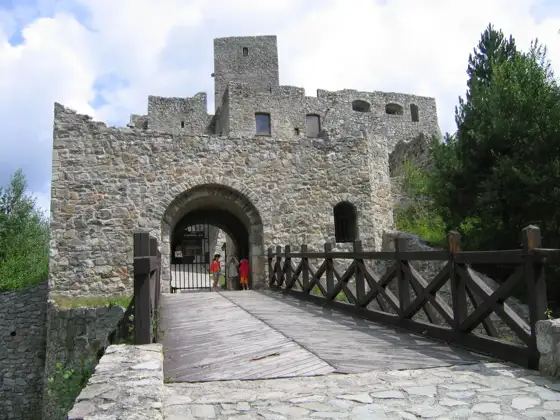
If you like the story, combine the visit with other fortresses in castles in Slovakia, or see the nearby Strečno Castle.
How to get there
By car the village is in northern Slovakia on the main roads through the Orava region. Travel times depend on where you start. From Žilina it is typically a drive of around an hour, and from the High Tatras it is a longer day trip, so many visitors treat it as a stop between the Tatras and Žilina or on the way to Poland. See driving in Slovakia for road rules and the vignette requirement, and car rental in Slovakia for supplier tips.
If you travel from Bratislava, the trip is long, so plan an overnight stop. The page Slovakia road trip shows how to place it in a longer route. Orava Castle is not close to an airport, so most visitors arrive from Žilina, Poprad or Kraków by road. Travellers who continue to Poland can use Bratislava to Zakopane for route options.
Visiting tips
- Wear shoes with grip: the stairs and cobbled slopes are steep and can be slippery when wet.
- Expect a climb of many steps, so the visit is not suited to wheelchairs or pushchairs.
- Check the official site (oravamuzeum.sk) for opening hours, tour options and ticket prices, because they change by season.
- Arrive early on summer weekends, when school groups and tour buses arrive.
- The village below has a view of the whole cliff, which is the best spot for photos.
Orava Castle for Nosferatu and photography fans
The best views of the castle are from the village below and from the road approaching it, where the whole cliff and the tower stack are visible in one frame. Inside, the climb through stone passages, courtyards and the high tower area gives the atmosphere that made it a film location.
- Morning light and quiet weekdays suit photographs best.
- Autumn mist and winter frost add atmosphere, but check the museum for reduced opening hours and icy steps.
- Look for the Knights' Room, the chapel and the museum collections as you climb.
Read the best time to visit Slovakia to choose a season.
Best time to visit
Late spring and early autumn are comfortable: the light is good and the crowds are smaller than in July and August. Summer is the busiest season. In winter the opening hours are usually shorter or limited, and the stone steps can be icy, so check the museum before you drive. For the wider seasonal picture, see best time to visit Slovakia.
Nearby combinations
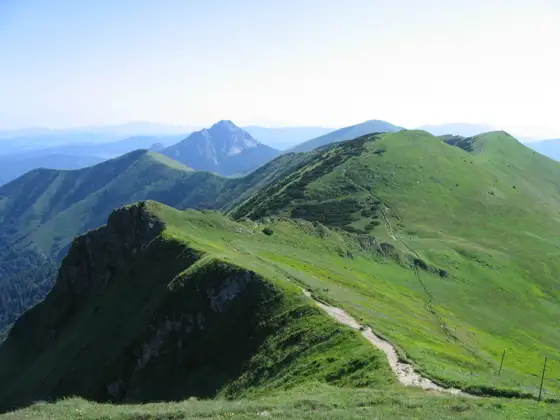
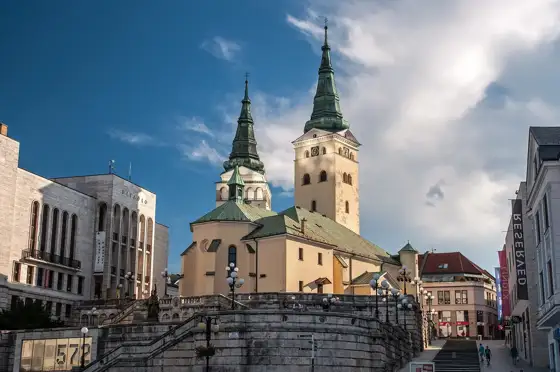
Orava Castle fits well into a northern route. From Žilina you can add Žilina itself and the Strečno Castle on the way. The Malá Fatra is also within reach for a day of hiking. Folk architecture fans can pair the castle with Vlkolínec, a UNESCO village near Ružomberok, and the High Tatras make a natural next stop. For more fortresses see castles in Slovakia.
What to expect inside, step by step
- Arrive and look up. The castle stands on a rock spur above the river, so start with the view from the village below.
- Buy your ticket. Tour options and ticket types change by season, so check the Orava Museum website at oravamuzeum.sk before you go.
- Climb through the lower castle. The stone passages and stairs lead you up in stages.
- See the museum rooms. Furnished interiors, paintings, weapons, a chapel and ethnographic collections are on display.
- Finish at the upper terraces for views over the river valley, then walk down slowly, because steps can be slippery.
Orava Castle in film
The castle is best known for the 1922 film Nosferatu, where it stood in for Count Orlok's castle. It also appears in a range of other productions, including the 1972 film Adam Šangala and a 2020 television adaptation of Dracula. That screen history explains why the castle is often called the Dracula castle, although the story it is linked to is fiction. See castles in Slovakia for other fortresses with film links.
Orava Castle compared with other castle stops
| Castle | Setting | Best for |
|---|---|---|
| Orava Castle | Rock spur above a river, intact and furnished | Photography and history |
| Spiš Castle | Large hilltop ruin | Space, views, UNESCO area |
| Strečno Castle | Cliff above the Váh river | A quick stop on the way |
If you only have time for one northern castle, Orava gives the strongest sense of a complete castle with interiors.
Planning a day in the Orava region
Plan for a half day at the castle and the village. If you are driving from Žilina, add Strečno on the way. Check opening hours first, then decide whether to continue towards the High Tatras or stay overnight. See also the Slovakia road trip page for linking stops.
Weather matters because much of the visit is outdoors on steps and terraces. Bring a rain layer in shoulder seasons and a hat in summer.
Is there a Dracula castle in Bratislava?
No. People who search for a Dracula castle near Bratislava usually mean Orava Castle, which is in the north of the country and far from the capital. Bratislava Castle is a different building, a white palace-like castle above the Danube with no vampire story attached. If you want the Dracula castle in Slovakia, plan a separate trip north, ideally combined with Žilina or the High Tatras.
- Dracula castle Slovakia: Orava Castle, thanks to Nosferatu.
- Dracula castle in Romania: Bran Castle, the one most often marketed under that name.
- Nearer to Bratislava: for a castle day closer to the capital, see castles near Bratislava and Čachtice Castle.
The real Vlad the Impaler ruled in Wallachia, in today's Romania, and has no connection to Slovakia.
Orava Castle tours and tickets
The interior is part of the Orava Museum, so tickets and tour options come from the museum rather than from a third party. Check the official site (oravamuzeum.sk) for current routes, languages and opening hours, which change by season. Guided day tours of northern Slovakia may appear on Klook for some dates, but availability varies, so confirm what is included before you pay.
If you drive yourself, allow time for the climb through the stone passages and the village below. See car rental in Slovakia to compare suppliers.
Frequently asked questions
Is Orava Castle the Dracula castle?
The 1922 silent film Nosferatu used the castle for scenes representing Count Orlok's castle, which is where the nickname comes from. It has no link to the historical Vlad the Impaler.
How long do you need at Orava Castle?
Allow around two to three hours for the castle and the village below. Add time if you plan a guided tour or a meal in the area.
Can you visit Orava Castle in winter?
Opening depends on the season and the weather, and hours are usually reduced in the colder months. Check the official museum site before you travel.
Is Orava Castle suitable for children?
Older children usually enjoy the towers and the passages. Small children and pushchairs struggle with the many steps.
Can you reach Orava Castle by public transport?
Yes, Oravský Podzámok has a railway station and buses connect nearby towns. Check connections both ways, since rural services are less frequent.
Is Orava Castle worth visiting?
Yes, for its setting on a rock spur above the river and for its interiors and museum. Allow at least half a day with the village.
Is there a Dracula castle in Slovakia?
Orava Castle is called the Dracula castle in Slovakia because scenes of the 1922 film Nosferatu were shot there. Dracula is a fictional character, and the historical Vlad the Impaler had no connection to this castle.
Where is Orava Castle located?
In the village of Oravský Podzámok in northern Slovakia, on a cliff above the Orava River. It is not in Bratislava, so allow a long drive or an overnight stop if you start from the capital.
Was Nosferatu filmed at Orava Castle?
Yes, scenes of the 1922 film Nosferatu were shot at Orava Castle, which stood in for the home of Count Orlok. That film link is the reason it is still known as Slovakia's Dracula castle.
Is there a Dracula castle in Bratislava?
No. The castle known as the Dracula castle in Slovakia is Orava Castle, in the north of the country, far from Bratislava. Bratislava Castle is a separate white castle above the Danube and has no link to Dracula or to Nosferatu. Plan an overnight stop if you drive north.
Did Dracula live at Orava Castle?
No. Dracula is a fictional count from Bram Stoker's novel, and the historical Vlad the Impaler ruled in Wallachia, in today's Romania. Orava Castle is linked to the story only because the 1922 film Nosferatu was shot there. The nickname is a marketing and film legacy, not history.
What is the difference between Orava Castle and Bran Castle?
Both are called Dracula castles, but Bran Castle is in Romania and is the one most often marketed under that name. Orava Castle in Slovakia earned the nickname through the 1922 film Nosferatu and is known for its cliff-top setting.
What is Orava Castle known for?
Orava Castle is known for its dramatic setting on a rock spur above the Orava River, its well-preserved interiors in the Orava Museum and its role in the 1922 film Nosferatu. The current form dates from 1611. Check the museum website for opening hours before you go.
Photo: Orava Castle · Lynx1211 · CC BY-SA 4.0