We may earn a commission when you book through links on this page, at no extra cost to you. Read our affiliate disclosure.
- UNESCO
- Wooden Articular Church, listed 2008
- Church built
- 1688, entirely of wood
- Region
- Spiš, on the Poprad River
- Best for
- Half-day trip from the Tatras
Diesen Reiseführer auf Deutsch lesen
Przeczytaj ten przewodnik po polsku
Přečtěte si tohoto průvodce česky
Olvassa el ezt az útmutatót magyarul
The easiest way to reach Kežmarok is by car from Poprad or the Tatra resorts, and a rental car from Economybookings or a similar service lets you combine it with Levoča and Spiš Castle. Kežmarok is a town in the Spiš region on the Poprad River, close to the High Tatras.
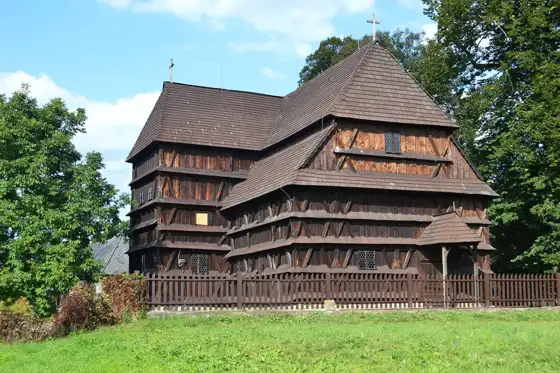
Its best-known sight is the Wooden Articular Church, a Protestant church built in 1688 entirely of wood. It has been a UNESCO World Heritage Site since 2008 as part of the wooden churches of the Slovak Carpathians. The town also has a castle, a basilica and Renaissance merchant houses.
Below are the ways to get there and what to see.
Top picks at a glance
Key takeaways
- The Wooden Articular Church was built in 1688 and is UNESCO listed.
- The town has a castle, a basilica and a Protestant New Church.
- Imre Thököly, born here in 1657, is buried in the town.
- Kežmarok is an easy half-day trip from the Tatras.
- Combine it with Levoča, Spiš Castle and Poprad.
Best ways to get to Kežmarok, ranked
Ranked by how well each option fits this trip: convenience, cost and who it suits. Some options are affiliate partners. How we rank
-
Our top pick1
Rental car with Economybookings
Best overallBest for: Combining sights
Economybookings compares car rental offers. A car lets you combine Kežmarok with Levoča, Spiš Castle and the Tatras. Check deposit and insurance terms.
Compare cars on Economybookings Read our Economybookings review- Flexible
- Easy for Spiš
- Parking near the centre
- Check deposit
-
2
Private transfer with Kiwitaxi
Best for door-to-doorBest for: Arrivals with luggage
Kiwitaxi offers private transfers between cities and airports. A transfer from Poprad-Tatry airport saves changing buses. Book ahead.
Book a transfer on Kiwitaxi Read our Kiwitaxi review- Door to door
- Fixed price
- More costly than buses
- Book ahead
-
3
Train or bus from Poprad
CheapestBest for: Budget travellers
Public transport links Poprad and Kežmarok. Check the current timetable and where the station is relative to the old town.
Official website- Cheap
- No parking worries
- Fixed timetable
- Limited evening services
-
4
Intui transfer
Best for groupsBest for: Small groups
Intui is a transfer booking service. For small groups a shared car can be good value. Compare quotes.
Book on intui.travel Read our intui.travel review- Good for groups
- Fixed price
- Not the cheapest
Getting there
From the Tatra resorts and Poprad, Kežmarok is a short ride. Read Poprad airport to the High Tatras, car rental in Poprad and Tatranská Lomnica for the base towns. From the east, see Košice to the High Tatras.
The Wooden Articular Church
The Wooden Articular Church was built in 1688 entirely of wood and contains an organ from 1719 with wooden pipes. It has been a UNESCO World Heritage Site since 2008. Visits may be limited by opening times and services, so check ahead. See wooden churches of Slovakia and UNESCO sites in Slovakia for the wider listing.
Castle, basilica and old town
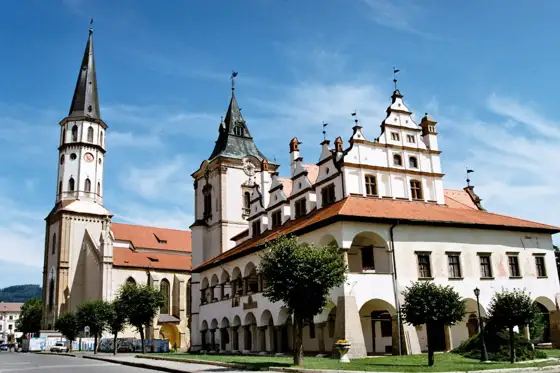
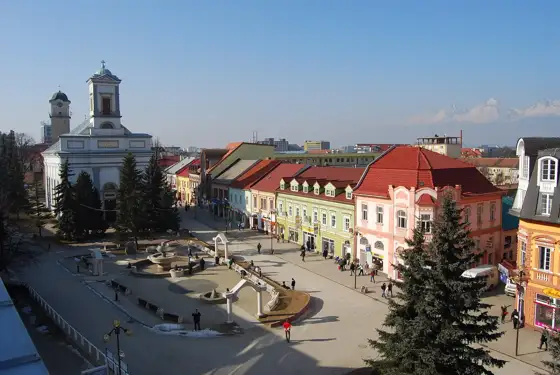
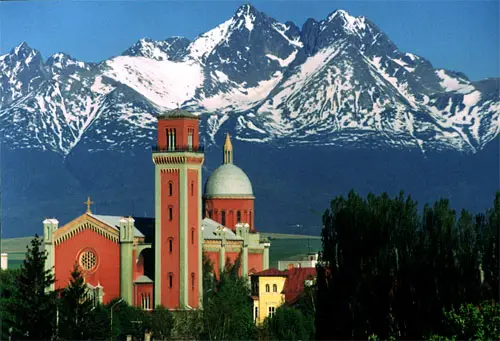
Kežmarok Castle, the Basilica of the Exaltation of the Holy Cross and the Protestant New Church are among the monuments, along with Renaissance merchant houses. A museum of old books is also in town. Walk the old town slowly and check opening days. Imre Thököly, a Hungarian noble leader born here in 1657, is buried in a mausoleum attached to the New Evangelical Church, next to the wooden articular church.
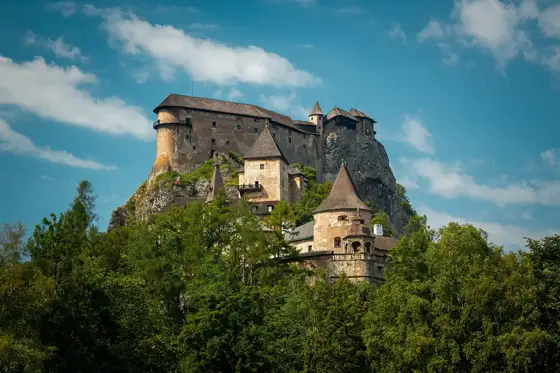
Orava Castle is another castle worth adding to the route.
Combining with Spiš
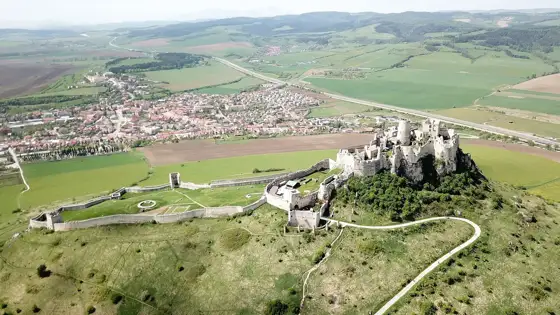
Kežmarok sits close to Levoča and Spiš Castle. With a car you can reach the High Tatras, such as Štrbské Pleso, in the same day. For a longer plan see the 3-day High Tatras itinerary. For a mountain walk, see the Green Lake (Zelené pleso) hike, a moderate full-day route near the Kežmarská chata hut. Book Lomnický štít tickets ahead in summer if you add the cable car in Tatranská Lomnica to your trip.
How long to spend in Kežmarok
The old town is pedestrianised and compact, and exploring it on foot takes about half a day. A short visit covers the wooden church, the square and a walk up towards the castle. If you want to go inside the castle museum, the Protestant churches and the historic library, allow most of a day. Many visitors fit Kežmarok between a morning in the mountains and an afternoon in Spiš, but that leaves little time for interiors.
Why the wooden church looks the way it does
The Wooden Articular Church is a late Baroque building put up when local Lutherans were allowed to build only in wood. It was finished in 1688, and the oldest items inside include an epitaph from 1688 and a Renaissance baptistery from 1690. Next to it stands a second Protestant church from 1717 whose interior is painted to look like marble. The old grammar school and historic library are beside them, so the whole complex is easy to see in one go. The church is part of the UNESCO listing of the wooden churches of the Slovak Carpathians. Because it is still used for services, visiting times are limited, so check ahead.
Getting there by train or bus
Kežmarok is linked to Poprad by bus and train, and by car it takes about 10 minutes from the E50 motorway, leaving between Spišský Štvrtok and Poprad. If you are staying in Poprad, the public transport option is simple enough for a day trip. From the resorts, such as Tatranská Lomnica, check current connections or use a transfer. For tickets and timetable basics see trains in Slovakia.
Kežmarok compared with nearby Spiš towns
| Place | Main draw | Good for |
|---|---|---|
| Kežmarok | Wooden church, castle museum, old town | A relaxed half day near the Tatras |
| Levoča | Walled square and St Jacob's church | Medieval town atmosphere |
| Spiš Castle | Large hilltop castle ruin | Views and history |
| Stará Ľubovňa Castle | Castle with open-air museum | A longer outing north of the Tatras |
Kežmarok is the closest of these to the mountains, which makes it the easiest to add to a Tatra holiday.
In winter and bad weather
Most of the interest is indoors or in short walks, so it works on a cold or wet day when the high trails are in cloud. Expect shorter hours outside the summer months and check each sight before you go. After a day of snow the cobbles can be slippery. Read Slovakia in winter and the High Tatras in winter for what else is open.
Mistakes to avoid
The commonest mistake is to arrive on a Monday or during a service and find the churches closed to visitors. Check opening days first, and ask locally about service times. Another is to treat Kežmarok as a quick photo stop: the wooden church is small, and the interest lies in the detail of the interior and the complex of buildings around it. Finally, do not leave your car on the cobbled streets of the centre. Use a car park on the edge and walk in, since the old town is pedestrianised. If you are driving on from here, read driving in Slovakia and car rental in Poprad.
Practical tips
- Check opening days, since churches and museums can close on Mondays.
- Cobbled streets call for comfortable shoes.
- Cafes in the centre close early in the off season.
- The currency is the euro.
Frequently asked questions
What is Kežmarok known for?
The UNESCO-listed Wooden Articular Church, its castle and its old town.
When was the Wooden Articular Church built?
In 1688, entirely of wood. It became a UNESCO site in 2008.
How do I get to Kežmarok from the High Tatras?
By car, bus or train via Poprad. A car or transfer is the easiest.
Is Kežmarok worth a visit?
Yes, for the church and castle. It suits a half-day trip from the Tatras.
Can I combine Kežmarok with Levoča?
Yes. With a car, both can be seen in one day along with Spiš Castle.
How long do I need in Kežmarok?
About half a day for the old town and the main sights. Add a few hours if you want to visit the castle museum and the churches inside.
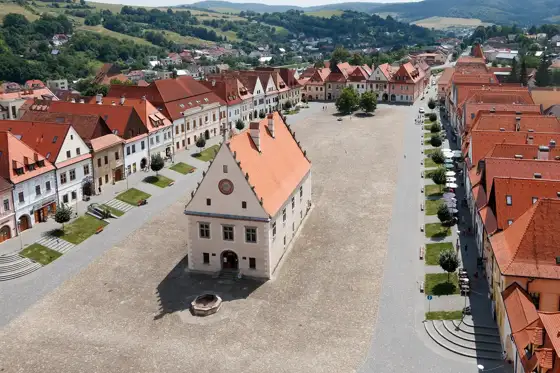
Photo: Kežmarok · Marek Kvackaj · CC BY-SA 3.0