We may earn a commission when you book through links on this page, at no extra cost to you. Read our affiliate disclosure.
- Network length
- about 3,626 km
- Main operators
- ZSSK, RegioJet, Leo Express
- Tatra Electric Railway
- 35 km of metre-gauge track
- First Slovak railway
- 1840, Bratislava to Svätý Jur
Diesen Reiseführer auf Deutsch lesen
Przeczytaj ten przewodnik po polsku
Přečtěte si tohoto průvodce česky
Olvassa el ezt az útmutatót magyarul
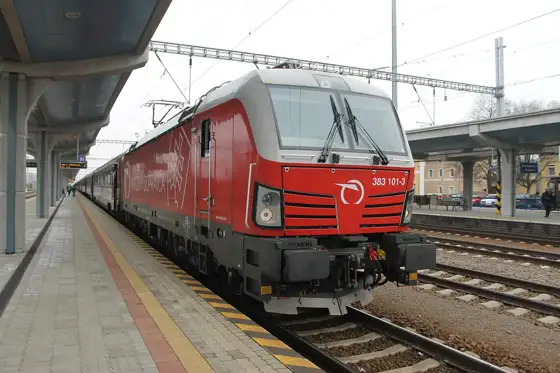
Slovak trains are run mainly by the state railway ZSSK (Slovak Railways), with private carriers RegioJet and Leo Express on selected routes. Trains work well on the main corridors, and the practical first step is to sort out luggage so you can explore stations and cities hands-free. Taply ranks Radical Storage first for that reason. Our Radical Storage review covers how the service works.
Slovakia has about 3,626 km of railway, and most visitors only use a few lines: Bratislava to Košice, Bratislava to Prague or Vienna, and the narrow-gauge line in the High Tatras. This post is an overview of how the system fits together. For ticket mechanics see how to buy train tickets in Slovakia. For buses, cars and transfers alongside the trains, see getting around Slovakia.
Top picks at a glance
Key takeaways
- ZSSK is the state passenger operator; RegioJet and Leo Express are private operators on selected long routes.
- The main east-west line links Bratislava with Košice, with a change to buses or regional trains for many smaller places.
- The High Tatras have their own metre-gauge electric railway, separate from the main network.
- Trains suit city-to-city trips; remote villages and some trailheads are easier by car or bus.
Best ways to make train days easier, ranked
Ranked by how well each option fits this trip: convenience, cost and who it suits. Some options are affiliate partners. How we rank
-
Our top pick1
Luggage storage with Radical Storage
Best for station daysBest for: Long layovers and day trips
If you arrive early or leave late, bags are the main problem on a train day. Radical Storage lets you book storage near stations and attractions in advance, so you can walk around without a suitcase.
Find storage on Radical Storage Read our Radical Storage review- Book ahead
- Frees you for sightseeing
- Check the exact location and hours
- Costs extra
-
2
ZSSK (Slovak Railways)
Widest networkBest for: Anywhere in Slovakia
The state operator runs passenger trains across the country, including the Tatra Electric Railway. Timetables and tickets are on the official site.
Official website- Covers most towns
- Runs the Tatra line
- Older stock on some regional lines
-
3
RegioJet
Best comfort tiersBest for: Prague and Brno links
A private Czech company founded in 2009 that offers several service classes and seat selection. It runs trains on routes such as Prague to Bratislava.
Official website- Seat choice
- Several service classes
- Fewer routes inside Slovakia
-
4
Leo Express
App bookingBest for: Prague to Bratislava
A private operator that advertises Prague to Bratislava among its popular routes. It has a mobile app for booking and managing tickets.
Official website- Simple app
- Cross-border route
- Cancellation is only possible to Leo credits, per its site
Slovak Railways (ZSSK): the national railway in short
ZSSK, short for Železničná spoločnosť Slovensko, is the Slovak railway company that runs most passenger trains in the country. The tracks and stations belong to a separate state body, ŽSR. The official ZSSK website has an English version where you can search timetables and buy tickets.
- Long-distance trains link Bratislava, Žilina, Poprad and Košice.
- Regional trains stop in smaller towns and are slower, with older carriages on some lines.
- International trains run to Vienna, Budapest and Prague, shared with other operators on some routes.
- The Tatra Electric Railway is run by ZSSK too, but it is a separate narrow-gauge line in the mountains.
For a visitor, the Slovak railway is simple to use once you know which line you need. Compare your route in the timetable, then read about the Tatra Electric Railway if you are heading to the mountains.
Who runs the trains
ZSSK (Železničná spoločnosť Slovensko) is the state-owned passenger company, and the infrastructure belongs to a separate state body, ŽSR. Private operators RegioJet and Leo Express run services on selected routes, mainly long-distance lines to the Czech Republic and eastern Slovakia. As a visitor you only deal with the operator whose train you ride, but timetable search sites will show all of them together. Choosing between the two countries? See Slovakia vs Czech Republic.
Routes that matter for visitors
- Bratislava to Košice: the backbone of the country, passing Žilina and the foothills of the Tatras. See Bratislava to Košice for options.
- Bratislava to Prague: served by several operators, covered in Bratislava to Prague.
- Bratislava to Vienna: a short international hop, see Bratislava to Vienna.
- To the High Tatras: usually a main-line train to Poprad, then the mountain railway. Details in Bratislava to the High Tatras.
Slovak rail map: the lines you will actually use
A map of Slovak railways looks dense, but visitors use a short list. The core is one long line from the west to the east of the country.
- Bratislava to Žilina to Poprad to Košice: the backbone, passing the foothills of the High Tatras.
- Poprad to Štrbské Pleso and Tatranská Lomnica: the mountain railway, reached by changing at Poprad or Starý Smokovec.
- Bratislava to Vienna, Prague and Budapest: the main international links. See Bratislava to Vienna and Bratislava to Prague.
Other lines reach towns such as Banská Bystrica and smaller regional stops, but many need a change or are slower than the bus. When in doubt, search the exact date on the timetable, since weekend service can differ from weekdays. Pair rail with a bus or car for castles and national park entrances, see Slovakia travel tips.
The Tatra Electric Railway
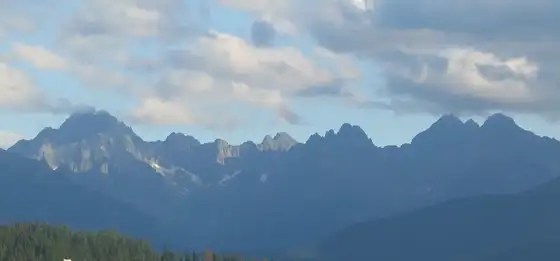
The High Tatras have a metre-gauge electric railway made of two connected lines, Poprad to Štrbské Pleso via Starý Smokovec (29.1 km) and Starý Smokovec to Tatranská Lomnica (5.9 km). It opened between 1908 and 1912 and today is operated by ZSSK. It links the resorts (Štrbské Pleso, Tatranská Lomnica) and many trailheads, so it works as local transport for hikers. See the High Tatras guide for the area as a whole.
What to expect on board
Expect a mix of newer electric units and older carriages. Long-distance trains generally offer seat reservations, and private operators usually sell different service tiers. Facilities such as food service or power sockets vary by train and operator, so check the details when you book rather than assuming them.
When trains are not the best choice
Smaller towns, castles and many national park entrances are not on a rail line, or the station sits far from the sights. For a loop through several of those, a rental car often saves time, see car rental in Slovakia. For mountain access in winter, a transfer can be simpler with ski gear.
Practical tips
- Check the timetable for your exact date, since weekend service can differ from weekdays.
- Allow extra time for changes, especially at Žilina and Poprad.
- Keep your ticket available offline on your phone.
- Large luggage is easier on direct trains than on short regional hops.
- Buy the whole journey as one itinerary when possible, so a delay on one leg is handled by the operator.
Choosing between ZSSK, RegioJet and Leo Express
| Operator | What it is | Where you will meet it |
|---|---|---|
| ZSSK | State passenger operator | Nearly every line, from regional stoppers to long-distance trains |
| RegioJet | Private Czech-based operator | Selected long-distance routes, including services to the Czech Republic |
| Leo Express | Private operator | Selected routes, check the current network on its site |
The same corridor can have trains from several operators, and prices, comfort levels and timings differ. Compare the options for your exact date rather than assuming one is always cheaper.
A simple way to plan a rail trip
- Pick your fixed points first, for example Bratislava, Poprad and Košice.
- Search the timetable for each leg on the date you will travel, and note any change stations.
- Decide which legs suit rail and which need a car or bus. Mountain trailheads and castles often fall into the second group.
- Buy tickets, saving them offline on your phone. Our guide on buying train tickets explains the steps.
- Plan luggage for station days, see luggage storage at Bratislava station.
Stations and getting around the big hubs
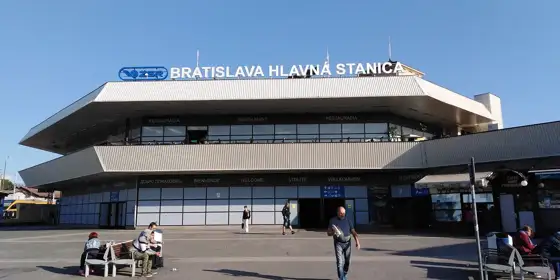
Bratislava's main station is the starting point for most rail trips, see Bratislava main train station for the layout and the connections into town, and public transport in Bratislava for tram and bus links. Poprad-Tatry is the usual gateway to the mountains, and Košice is the main hub in the east. The station is not always next to the old town, so allow time for a short tram, bus or walk. For the Austrian connection, see how to get from Vienna to Bratislava by train, bus, boat or shuttle.
Luggage, bikes and accessibility
Carry what you can lift, since some platforms and older carriages involve steps. Bikes are carried on some trains, but rules and spaces vary by service, so check before you book. Travellers who use a wheelchair or need assistance should contact the operator ahead, because accessible carriages and boarding help depend on the train. Stations in smaller towns may have limited facilities.
Mistakes to avoid
- Booking a tight connection at a change station. A short delay on one leg can break the plan.
- Forgetting a seat reservation on a busy day when the train type requires one.
- Expecting a rail line to every attraction. Check where the station sits relative to the sight.
- Not checking the final train of the day, especially on weekends and holidays.
- Relying on rail only for a multi-stop countryside trip. A mix of train and car often works better, see Slovakia road trip.
Frequently asked questions
Is the train a good way to travel in Slovakia?
Yes for the main routes between Bratislava, Žilina, Poprad and Košice. For villages, castles and trailheads away from the line, buses or a car are often more practical.
Who operates trains in Slovakia?
ZSSK is the state passenger operator. RegioJet and Leo Express are private operators running selected long-distance routes.
Is there a train to the High Tatras?
Yes. Main-line trains reach Poprad, and the Tatra Electric Railway continues to Starý Smokovec, Štrbské Pleso and Tatranská Lomnica.
Can I take a train from Bratislava to Prague?
Yes, several operators run the route, including RegioJet and Leo Express. Check current timetables and fares before you travel.
Can I store luggage at Slovak train stations?
Options exist in Bratislava and other cities, but availability and hours vary. Pre-booking storage near the station avoids surprises.
Should I book Slovak train tickets in advance?
For busy routes and holiday dates it is sensible, and advance fares may be lower on some operators. Check your operator's current rules.
Is it better to take the train or the bus?
Trains are usually more comfortable on the main corridors, while buses reach some towns that rail does not. Compare both for your route.
What are the Slovak railways called?
The state passenger operator is ZSSK, Železničná spoločnosť Slovensko, also called Slovak Railways. The infrastructure belongs to ŽSR. Private operators RegioJet and Leo Express run trains on selected routes.
Are trains in Slovakia good for tourists?
Yes on the main lines between Bratislava, Žilina, Poprad and Košice, and to Vienna, Prague and Budapest. Regional lines are slower and some sights are far from a station, so combine train with bus or car.
Is there an English version of the ZSSK website?
Yes, the ZSSK site (zssk.sk) offers an English version for timetable search and tickets. Check your exact travel date, since services differ on weekends and holidays.
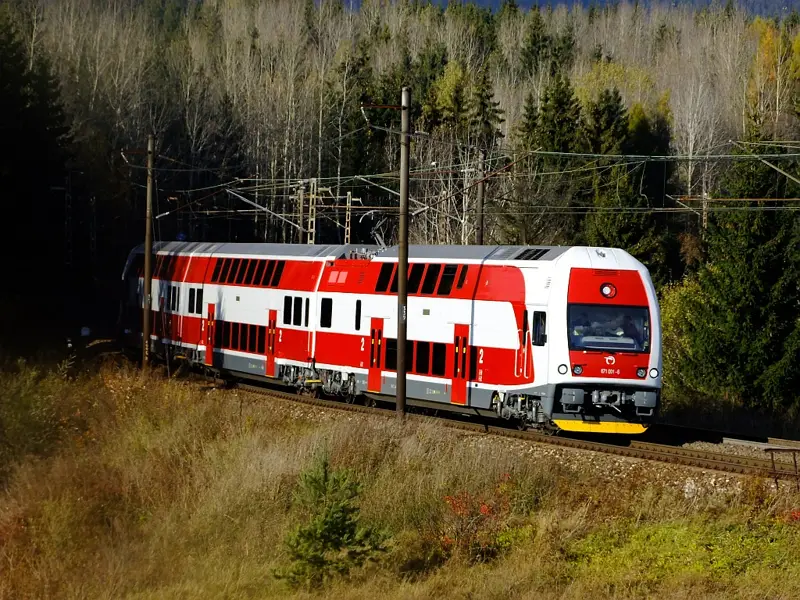
Photo: Rail transport in Slovakia · Tomáš Chovanec · CC BY-SA 3.0