We may earn a commission when you book through links on this page, at no extra cost to you. Read our affiliate disclosure.
- Východná festival
- Usually first weekend of July
- Fujara
- UNESCO intangible heritage, 2008
- Čičmany reserve
- Established 1977
- Best way to visit
- By car, villages are rural
The best way to see Slovak folk culture is to drive to a few rural places, and a rental car comparison on QEEQ is a sensible starting point. Folk heritage here is spread across villages, open-air museums and summer festivals rather than concentrated in one city.
Three things stand out: the music (especially the fujara, a shepherd's flute), the architecture (log houses and painted facades) and the festivals, led by Východná. Most of it is seasonal, so timing matters more than distance.
This page is distinct from the UNESCO list. For that, see UNESCO sites in Slovakia and Vlkolínec.
Top picks at a glance
Key takeaways
- Východná, the main folklore festival, is usually held on the first weekend of July.
- The fujara is a large shepherd's flute that UNESCO listed as intangible heritage in 2008.
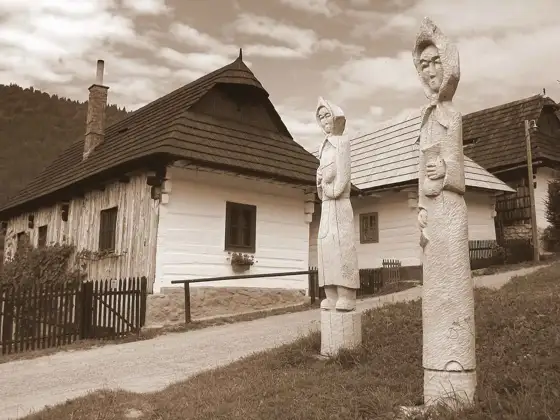
- Čičmany is known for white painted patterns on dark timber houses.
- Villages are rural, so a car gives the most flexibility.
Best ways to explore Slovak folk culture, ranked
-
Our top pick1
Rental car with QEEQ
Best overallBest for: Road trippers
Folk villages and open-air sites are spread through the north and centre, with limited public transport to the smallest places. QEEQ compares car hire offers, so check the deposit, insurance cover and mileage rules before you book.
Compare cars on QEEQ- Reach small villages
- Combine several stops in a day
- Rental cost and deposit
- Mountain roads need care
-
2
Rental car with GetRentacar
Alternative car optionBest for: Price comparers
GetRentacar is another comparison site. Compare it with other offers for your dates, pickup city and one-way needs.
Rent on GetRentacar- More choice
- Useful for pickup in Bratislava or Košice
- Terms vary by supplier
-
3
Guided tours with Klook
Best for guided visitsBest for: Visitors who prefer a guide
Klook lists tours across Europe. Folk themed tours are not guaranteed for every region, so check what is bookable for your dates.
See tours on Klook- Context from a guide
- No driving
- Limited availability
- Fixed schedule
-
4
Private transfer with GetTransfer
Flexible quotesBest for: Groups and families
GetTransfer lets you request offers for a route. Ask drivers for a quote for a village and confirm waiting time before you agree.
Get offers on GetTransfer- No driving
- Price agreed ahead
- Waiting time may cost extra
-
5
Regional trains (ZSSK)
CheapestBest for: Budget travellers
Trains reach the larger towns on the main lines, but the villages need a bus or taxi on top. Check connections carefully.
Official website- Low fares
- Slow and less flexible for villages
Music and the fujara
The fujara is a large wind instrument from central Slovakia. It is a shepherd's overtone flute with a very low, soft sound, and it is around 160 to 200 cm long. UNESCO added The Fujara and its Music to the Representative List of the Intangible Cultural Heritage of Humanity in 2008. You are most likely to hear it at festivals and in folk ensembles, and it is also sold as a craft item, so ask for the maker rather than buying a cheap souvenir copy.
Východná festival
The Východná folklore festival has been held since 1953 in an open-air theatre above the village of Východná in the Liptov region. It is usually held in early summer, on the first weekend of July, and brings together song, dance, costumes and exhibitions over three days. Check the organiser's site for the current dates and ticket rules, since the programme changes each year. Combine it with Liptovský Mikuláš and the High Tatras.
Čičmany and painted houses
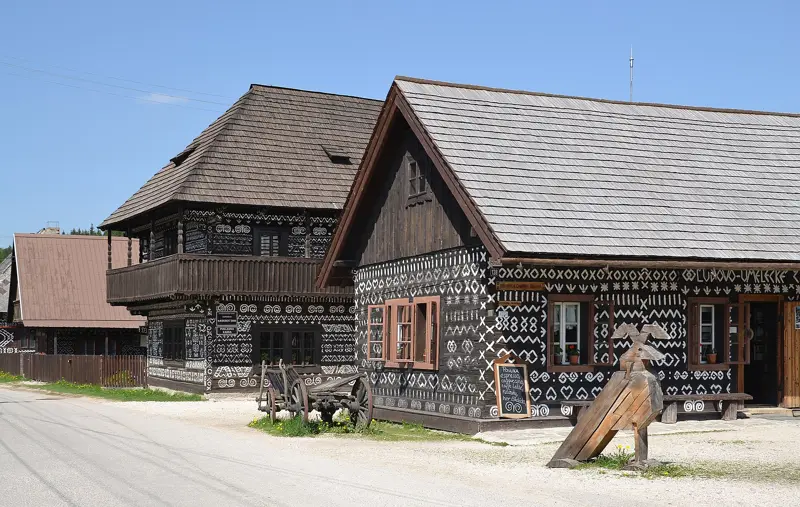
Čičmany is a village in the Žilina Region, at about 645 m, known for timber houses decorated with white painted patterns on the exterior walls. A folk architecture reserve was established there in 1977. The first written mention is from 1272, and a large fire in 1921 destroyed much of the village, which was then rebuilt in its original style. Around 125 people live there today, so treat it as a living village and not a theme park. Pair it with Vlkolínec and Malá Fatra on a northern loop.
Folk architecture and open-air museums
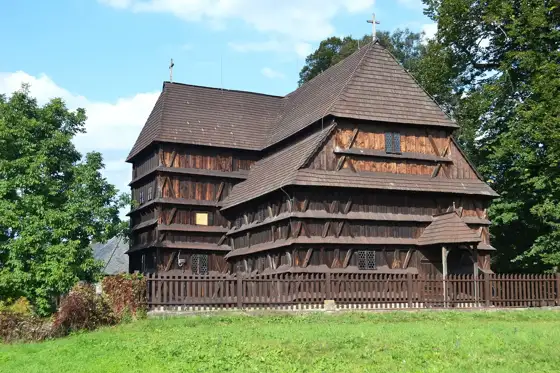
Slovakia protects several folk architecture reserves, of which Vlkolínec and Čičmany are the best known. Open-air museums (skanzens) rebuild old houses, churches and workshops in one place. Their opening times are seasonal, so check each museum's website before you drive. For the churches that carry a UNESCO listing, see wooden churches of Slovakia.
Rural restaurants and farm guesthouses tend to serve regional dishes such as halušky, pirohy and soups. See Slovak food to try for the dishes, and Slovak beer guide for what to drink. Many small places take cash only or have patchy card payment, so carry some euros. Opening hours in villages can be short outside summer, so confirm before you drive a long way for a meal.
Planning a folk themed route
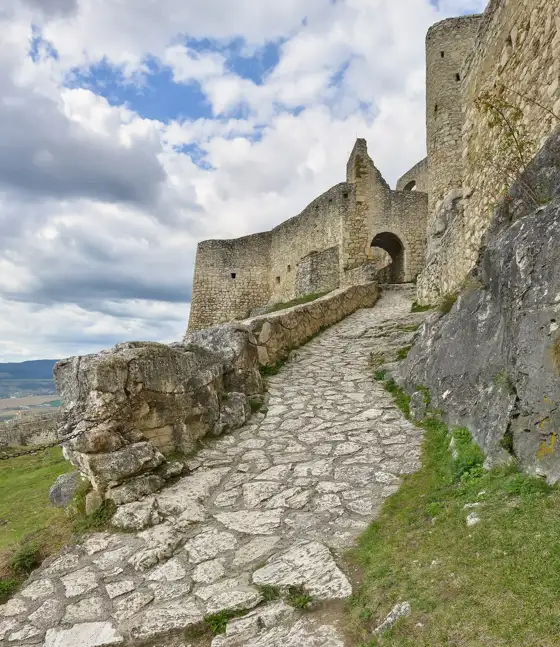
A simple route is Žilina, Čičmany, Vlkolínec, then east towards Liptov and Východná in July. Add Spiš Castle and Levoča if you continue east. See Slovakia road trip and driving in Slovakia before you book a car.
This route suits travellers who enjoy slow, rural days and do not mind driving. Skip it if you only have a day or two in Bratislava, where the better fit is the Old Town walk. With children, the open-air museums are usually easier than long drives between villages. In winter, check road conditions and expect many seasonal venues to be closed.
Folk culture in everyday life
Folk traditions are not only museum pieces. Regional costumes (kroj) appear at festivals, weddings and church holidays, and each region has its own patterns and colours. Village fairs and local festivals fill the summer calendar, usually announced on municipal websites a few weeks ahead. If you want to see folk life without a festival ticket, a village feast day or a market in a small town is often the easiest option. Ask your accommodation host what is on locally, since many events are not advertised in English.
Look for hand made items from traditional crafts such as wood carving, pottery, embroidery and corn husk or straw work. Buy from the maker or from a market stall with a named workshop. Prices vary too much to quote, so compare a few stalls and ask what is hand made.
Frequently asked questions
When is the Východná festival?
It is usually held on the first weekend of July. Confirm the exact dates on the official festival site.
What is a fujara?
A large shepherd's flute from central Slovakia, around 160 to 200 cm long. UNESCO listed it as intangible heritage in 2008.
Is Čičmany worth a visit?
Yes if you like folk architecture. It is small, so one to two hours is usually enough.
Can I reach folk villages without a car?
Some are reachable by bus from larger towns, but timetables can be limited. A car or a tour is easier.
Is Čičmany a UNESCO site?
No, it is a protected folk architecture reserve, not a UNESCO World Heritage Site. Vlkolínec is the UNESCO village.
Photo: Čičmany · Pudelek · CC BY-SA 4.0