We may earn a commission when you book through links on this page, at no extra cost to you. Read our affiliate disclosure.
- National dish
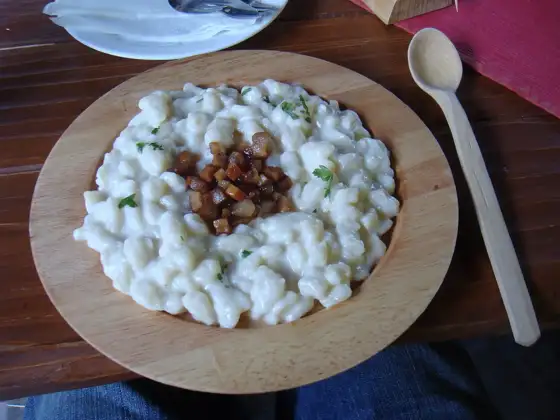
- Bryndzové halušky
- Staples
- Potatoes, cabbage, sheep cheese
- Cheapest meal
- Weekday lunch menu
- Soft drink
- Kofola
Diesen Reiseführer auf Deutsch lesen
Przeczytaj ten przewodnik po polsku
Přečtěte si tohoto průvodce česky
Olvassa el ezt az útmutatót magyarul
Slovak cuisine is the hearty, mild home cooking of Slovakia, built on potatoes, cabbage, sheep cheese, dairy and smoked meat, and its national dish is bryndzové halušky: small potato dumplings with soft sheep cheese and bacon. Start there, then work through soups, pastries and sweets.
Slovak cooking is hearty, built on potatoes, cabbage, dairy and smoked meat. Most places also serve a cheaper weekday lunch menu, which is the best way to sample local food without overspending. Our Bratislava food and drink guide covers the capital in more detail.
Some links on this page are affiliate links. Taply may earn a commission at no extra cost to you.
Top picks at a glance
Key takeaways
- Bryndzové halušky is the dish to try first.
- Soups such as kapustnica and demikát are filling and easy to order.
- Lunch menus on weekdays are the best value.
- Kofola and borovička are the two drinks most visitors ask about.
Best ways to try Slovak food, ranked
Ranked by how well each option fits this trip: convenience, cost and who it suits. Some options are affiliate partners. How we rank
-
Our top pick1
Food tour on Klook
Best overallBest for: First-time visitors
Klook lists food and drink tours in Slovak cities. Check which dishes are included, the group size and whether vegetarian options are offered before you book.
See tours on Klook Read our Klook review- Several dishes in one outing
- A local explains what you eat
- Fixed start time
- Availability depends on the date
-
2
Audio walk with WeGoTrip
Best self-guidedBest for: Independent travellers
A WeGoTrip audio tour gives context on the Old Town, and you can add your own lunch stop along the route.
See audio tours on WeGoTrip Read our WeGoTrip review- Own pace
- Low cost
- No tastings included
-
3
Food experiences on KKday
Best alternativeBest for: Comparison shoppers
KKday carries food tours and cooking classes in some European cities. Check whether current Slovak listings fit your dates.
See tours on KKday Read our KKday review- More choice
- Listings vary
-
4
Weekday lunch menu
CheapestBest for: Budget travellers
Many restaurants serve a set lunch on weekdays, often soup plus a main. Side-street places usually cost less than those on the main squares.
- Cheap
- Authentic
- Menus may be in Slovak only
Slovak cuisine at a glance
| Topic | Answer |
|---|---|
| National dish | Bryndzové halušky, potato dumplings with sheep cheese and bacon |
| Staples | Potatoes, flour, cabbage, sheep cheese, dairy, smoked meat |
| Typical soups | Kapustnica (sauerkraut soup) and demikát (bryndza soup) |
| Typical sweets | Lokše, parené buchty, poppy seed and walnut pastries |
| Drinks | Kofola, borovička, slivovica, local beer and wine |
| Taste | Filling and mild rather than spicy |
| Cheapest way to eat | The weekday lunch menu (denné menu) |
Dishes to try first
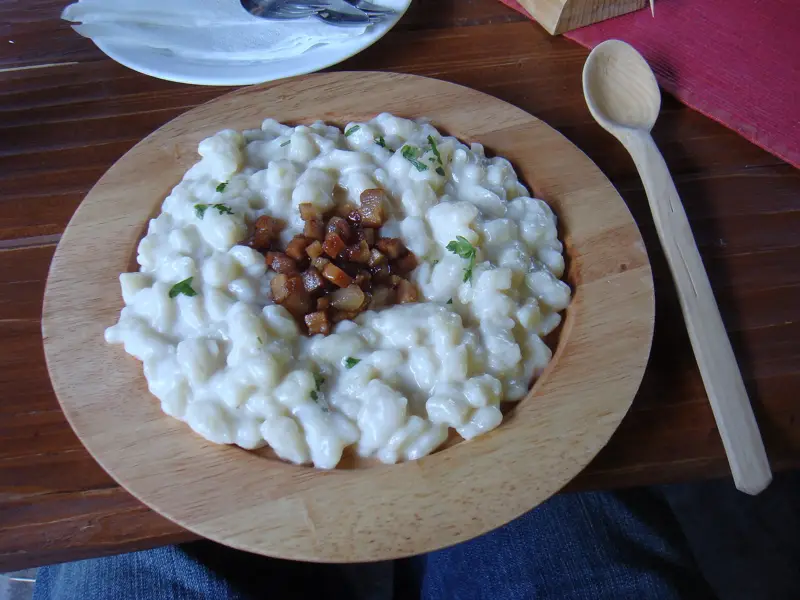
Bryndzové halušky are potato dumplings with bryndza, a soft sheep cheese, usually topped with bacon. Strapačky are a close relative, made with sauerkraut instead of cheese. Pirohy are filled dumplings, and bryndzové pirohy use the same cheese as the filling. Lokše are pancakes made of potato dough baked directly on the stove, served with fillings that can be sweet or savoury.
If you only order one thing, order halušky. Portions are large, so share if you also want a starter. Halušky is the dish at the top of what Slovakia is known for.
What is typical Slovak cuisine?
Slovak cuisine is mountain and farm cooking. Potatoes, flour, cabbage and dairy are the base, because sheep and cattle graze the highlands, and smoked meat and sausage add flavour through the cold months. The neighbours leave a mark too: paprika, goulash and schnitzel-style dishes show Hungarian and Austrian influence, and fried dumplings and sweet buns are shared with Czech and Polish kitchens. Dishes are filling rather than spicy. For how the country compares with Czechia overall, see Czech Republic vs Slovakia.
- Dumplings: halušky, strapačky and pirohy are the core of the traditional table.
- Soups: kapustnica and bryndza-based demikát.
- Cheese: bryndza and fried cheese (vyprážaný syr) appear everywhere.
- Sweet: lokše, buchty and poppy seed pastries.
Seasonal produce, mushrooms from the forests and fruit for jams, compotes and brandies add variety, while recipes stay simple and portions generous. Regional differences are small compared with the shared core of dumplings, soups and cheese.
For the national dish in detail, read bryndzové halušky.
Soups and sweets
Kapustnica is a sauerkraut soup, often with mushrooms, meat and sausage, and it is common around Christmas. Demikát is a soup with bryndza as its base. Parené buchty are steamed dumplings with fillings such as jam, plum, curd or poppy seed. Trdelník, the cake baked on a rotating spit, is sold in tourist areas, and the Bratislava crescent roll (bratislavský rožok) is a pastry filled with poppy seed or walnut.
What do Slovaks eat for lunch?
Lunch is the main meal of the day in many Slovak homes and restaurants. The usual pattern is a soup first and a main course after it, often on a set weekday menu (denné menu) that is cheaper than ordering a la carte. Typical lunch mains are a dumpling dish such as halušky, fried cheese or a breaded cutlet with potatoes, goulash with bread dumplings, or roast meat with cabbage.
- Look for the daily menu board outside a restaurant.
- Soup is usually included in the set price.
- Portions are large, so you can often skip a starter.
- Many places serve lunch only on weekdays, so check on weekends.
Vegetarian travellers can read vegetarian food in Slovakia, and the capital is covered in Bratislava food and drink. Drinks are in the Slovak beer guide.
Drinks
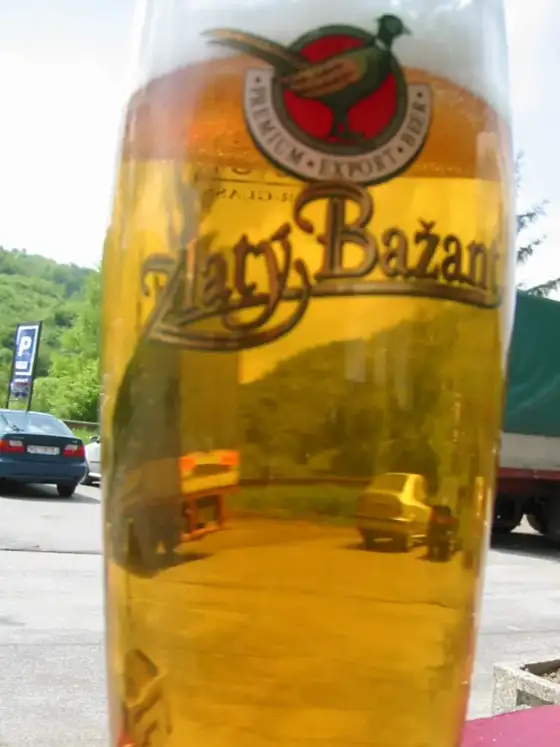
Kofola is a herbal cola-style soft drink that dates from Czechoslovakia in 1960 and is popular in both Slovakia and the Czech Republic. Borovička is a juniper spirit with a taste close to dry gin and usually around 40 percent alcohol, and the name comes from the Slovak word for juniper. Slivovica is the plum brandy you will also see. For beer see our Slovak beer guide, and for wine see wine regions of Slovakia.
How to order and pay
Look for a board outside called denné menu (daily menu). The set meal is cheaper than ordering a la carte, and soup is usually part of it. A tip of around 10 percent is normal if service was good, so check whether a service charge is already on the bill. Learn a few words before you go, see Slovak phrases for travellers.
Meals on tourist squares cost more than on side streets. See Slovakia travel cost for a wider budget.
Dietary needs
Traditional food leans on meat and dairy, but most restaurants have at least one vegetarian dish, and strapačky, pirohy and fried cheese are common meat-free choices. Check bacon and lard in anything that looks vegetarian, and ask politely in advance if you avoid gluten or dairy. Smaller village restaurants may have fewer options than city places.
Where to eat it
Bratislava has the widest choice, see Bratislava food and drink and the Old Town walking tour. In the mountains, mountain huts and Tatra resorts serve the same classics, see the High Tatras guide. Eastern towns such as Košice are good for a slower lunch away from the capital crowds.
A simple one-day tasting plan
Breakfast on a bakery pastry or a poppy seed roll, and have soup at lunch from the weekday menu. Eat halušky or pirohy as the main meal, and finish with a sweet dumpling or a lokše. In the evening, choose a pub for a snack and a local drink. This gives you most of the national flavours in a single day without spending much, and it works in any Slovak town.
Seasonal and regional notes
Kapustnica and heavy dumpling dishes suit cold weather and the Christmas season, see Bratislava Christmas markets for seasonal stalls. Sheep cheese is closely tied to the mountain pastures of central and northern Slovakia, so bryndza dishes often taste best in the Tatra region. In summer, many places add salads and lighter grilled dishes. Menus differ between restaurants, so treat this list as a guide, not a guarantee, and ask the waiter what is made fresh that day. Many towns also run Advent stalls, listed in Christmas markets in Slovakia.
A menu cheat sheet
| Name on the menu | What it is | Meat? |
|---|---|---|
| Bryndzové halušky | Potato dumplings with sheep cheese | Usually bacon on top |
| Strapačky | Dumplings with sauerkraut | Often bacon |
| Kapustnica | Sauerkraut soup | Often sausage or meat |
| Vyprážaný syr | Fried cheese, often with fries and tartar sauce | No |
| Pirohy | Filled dumplings | Depends on filling |
| Lokše | Potato pancakes | Depends on filling |
Always ask if a vegetarian dish uses bacon or lard.
Sweet shops and bakeries
Slovak bakeries sell poppy seed and walnut pastries, yeast buns and cakes at low prices, which makes them a quick breakfast. Cafes in cities offer cake in the Central European style. In the Old Town of Bratislava you will see tourist sweets as well as local ones, so look for places where Slovaks queue. See Bratislava food and drink for the capital.
Eating well in different regions
Central and northern Slovakia is the home of sheep cheese dishes, so the High Tatras and Liptov regions are good places to try halušky, see the High Tatras guide. In the south, wine regions pair local wines with simple dishes, see wine regions of Slovakia. Eastern towns such as Prešov and Kežmarok have small restaurants with traditional menus and fewer crowds.
Common ordering mistakes
- Ordering a side dish you do not need. Many mains are already large.
- Skipping the daily menu because it is not in English. Use a translation app on the board.
- Asking for the bill the wrong way. In many restaurants you pay at the table or tell the waiter the total you want to pay, including tip.
- Expecting every kitchen to be open late. Some close in the afternoon and reopen for dinner.
Slovak cuisine compared with Czech and Hungarian food
Slovak cuisine shares a lot with its neighbours but has its own centre of gravity: sheep cheese and dumplings. Paprika, goulash and schnitzel-style dishes show Hungarian and Austrian influence, while fried dumplings, sweet buns and Kofola are shared with Czech kitchens. What makes Slovak food distinct is bryndza, the soft sheep cheese from the highland pastures, which turns up in halušky, pirohy and soup.
- Compared with Czech food: similar heavy mains and beer culture, but Slovak menus lean more on potato dumplings and sheep cheese.
- Compared with Hungarian food: paprika and goulash appear in both, though Slovak dishes are usually milder.
- Compared with Austrian food: schnitzel-style cutlets are common in both countries.
For the wider cultural comparison, see Czech Republic vs Slovakia.
What to eat in Slovakia: a short order
If you wonder what to eat in Slovakia, a sensible order is the national dish first, then a soup, then a sweet. Try bryndzové halušky or strapačky as a main, kapustnica or demikát as a starter, and lokše or parené buchty for dessert. Fried cheese is the easy option when you want something familiar, and many kitchens serve it with fries and tartar sauce.
- Day one: halušky and a local beer or Kofola.
- Day two: a weekday lunch menu with soup, then a pastry from a bakery.
- Day three: pirohy or lokše, and a small glass of borovička if you like spirits.
Eating out is cheaper on side streets than on tourist squares, see Slovakia travel cost. For the capital, use Bratislava food and drink, and for vegetarian options see vegetarian food in Slovakia.
Frequently asked questions
What is the national dish of Slovakia?
Bryndzové halušky, small potato dumplings with sheep cheese and bacon.
What is bryndza?
A soft, tangy sheep cheese used in halušky, pirohy and soups.
Is Slovak food spicy?
No. It is hearty and mild, relying on bacon, cabbage, dairy and paprika rather than heat.
Is there vegetarian food in Slovakia?
Yes. Strapačky, pirohy, fried cheese and salads are common. Check for bacon in traditional dishes.
What is Kofola?
A herbal soft drink with a sweet and sour taste, first made in Czechoslovakia in 1960.
Do I need to tip?
Around 10 percent is common for good service. Check whether a service charge is already on the bill.
What should I try if I only have one meal?
Order bryndzové halušky, and pair it with a local beer or Kofola.
What is typical Slovak food?
Typical Slovak food is hearty and built on potatoes, cabbage, sheep cheese and smoked meat. Bryndzové halušky, kapustnica, pirohy, strapačky and fried cheese are the dishes you will see on most traditional menus, usually in large portions and without much heat.
What do Slovaks eat for lunch?
Lunch is usually the main meal: a soup followed by a main course, often from a cheaper weekday set menu. Common mains are dumpling dishes, fried cheese, goulash or a breaded cutlet with potatoes. Look for the board marked denné menu outside restaurants.
What is the most popular food in Slovakia?
Bryndzové halušky is the best-known dish and is treated as the national food. Fried cheese with fries and kapustnica soup are also very popular with both locals and visitors, and you will find all three on most traditional menus across the country.
What is Slovak cuisine?
Slovak cuisine is hearty, mild cooking built on potatoes, flour, cabbage, sheep cheese, dairy and smoked meat. Its best-known dish is bryndzové halušky, and soups such as kapustnica, filled dumplings and sweet pastries round out a traditional menu. Portions are large and the flavours are rather gentle than spicy.
What should I eat in Slovakia?
Eat bryndzové halušky first, then try kapustnica, pirohy, strapačky and fried cheese. For something sweet, choose lokše or parené buchty. A weekday lunch menu is the cheapest way to sample several of these dishes in one meal. Ask for the daily menu board outside restaurants.
Is Slovak food similar to Czech or Hungarian food?
Partly. Slovak food shares goulash and paprika dishes with Hungary and fried dumplings and sweet buns with Czechia. It differs mainly in its focus on bryndza sheep cheese and potato dumplings, and it is usually milder than Hungarian cooking. Menus differ by restaurant, so ask what is made fresh.
What drinks go with Slovak food?
Kofola is the classic soft drink, and local beer suits most mains. Borovička, a juniper spirit, and slivovica, a plum brandy, are the traditional spirits. Wine from Slovak regions pairs well with simpler dishes. For beer, see our Slovak beer guide, and check the label on spirits, which are strong.
Photo: Bryndzové halušky · Gregory finster · CC0