We may earn a commission when you book through links on this page, at no extra cost to you. Read our affiliate disclosure.
- Regions
- Six
- Closest to Bratislava
- Small Carpathians
- Famous sweet wine
- Tokajský výber
- Main red grape
- Frankovka modrá
Diesen Reiseführer auf Deutsch lesen
Przeczytaj ten przewodnik po polsku
Přečtěte si tohoto průvodce česky
Olvassa el ezt az útmutatót magyarul
Slovakia has six wine regions, and the one most visitors reach is the Small Carpathians north of Bratislava. A half-day tour from the capital is the simplest way to taste there, and Klook is a good place to compare them. The most famous is the Tokaj region in the south-east, which is part of a UNESCO World Heritage cultural landscape. Is Klook legit for booking such tours? The review says yes, with caveats about customer support.
White wine dominates. Grüner Veltliner, Welschriesling and Müller-Thurgau are among the most planted white grapes, and Frankovka modrá (Blaufränkisch) is a main red. Our Bratislava wine tasting page covers day trips in more detail.
Some links on this page are affiliate links. Taply may earn a commission at no extra cost to you.
Top picks at a glance
Key takeaways
- Slovakia has six wine regions, and Small Carpathians is nearest to Bratislava.
- Tokaj in the south-east is the best-known international name.
- White wine is the main output.
- Do not drive after tasting.
Best ways to taste Slovak wine, ranked
Ranked by how well each option fits this trip: convenience, cost and who it suits. Some options are affiliate partners. How we rank
-
Our top pick1
Wine tours on Klook
Best overallBest for: Most visitors
Klook lists wine tasting tours from Bratislava. Check the number of wineries, tastings and transport included, and the guide language.
See tours on Klook Read our Klook review- Transport included
- Several tastings
- Fixed times
- Small Carpathians only
-
2
Tours on KKday
Best alternativeBest for: Comparison shoppers
KKday may list wine tours with a castle stop. Compare the itinerary and price.
See tours on KKday Read our KKday review- More choice
- Listings vary
-
3
Experiences on Tiqets
Best for ticketsBest for: Planners
Tiqets sometimes lists tastings and day experiences near Bratislava. Check what is currently offered.
See tickets on Tiqets Read our Tiqets review- Mobile tickets
- Availability varies
-
4
Private driver with Kiwitaxi
Best for flexibilityBest for: Small groups
Kiwitaxi offers private transfers between cities. Ask whether a multi-stop winery route is possible before booking.
Book a transfer on Kiwitaxi Read our Kiwitaxi review- Own schedule
- Multi-stop may not be available
- Costs more
-
5
Regional train and walking
CheapestBest for: Budget travellers
Pezinok and Svätý Jur are reachable from Bratislava by regional transport. Walk between cellars and check the timetable for the return.
- Cheap
- Timetable dependent
The six regions
Slovakia's wine regions are Malokarpatská (Small Carpathians), Južnoslovenská (South Slovak), Nitrianska (Nitra), Stredoslovenská (Central Slovak), Východoslovenská (East Slovak) and Tokaj. Only the Small Carpathians and Tokaj are well set up for visitors from abroad. For the others, ask a local tourist office before you plan a route.
Small Carpathians, near Bratislava
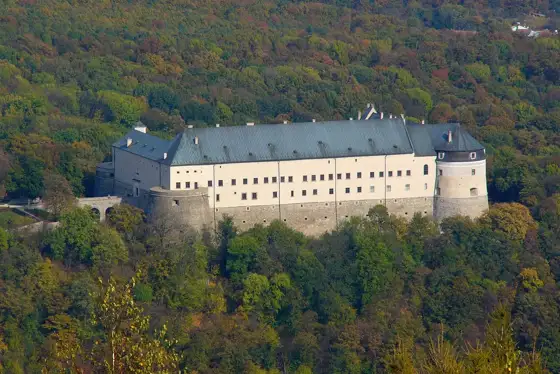
This region lies north of Bratislava along the Small Carpathian Wine Route and includes Svätý Jur, Pezinok and Modra. Family cellars often need a booking, so check opening times. Modra is also close to Červený Kameň castle, which some tours combine with tastings. Getting there by regional transport is possible, see Bratislava for the base.
Tokaj in the south-east
The Slovak part of Tokaj is seven villages in the Trebišov district, with roughly 900 hectares of classified vineyards. The region joined the UNESCO World Heritage list in 2002 as the Tokaj Wine Region Historic Cultural Landscape. Permitted grapes include Furmint, Lipovina and Yellow Muscat. The prestige wine is Tokajský výber, a sweet wine made from botrytised grapes and rated from 3 to 6 putňa by sugar content. Tokaj is a long way from Bratislava, so combine it with Košice in the east. Tokaj is one of the lesser known parts of what Slovakia is famous for.
Grapes to look for
| Grape | Slovak name | Style |
|---|---|---|
| Grüner Veltliner | Veltlínske zelené | Dry white, widely planted |
| Welschriesling | Rizling vlašský | Light white |
| Blaufränkisch | Frankovka modrá | Main red |
| Müller-Thurgau | Müller Thurgau | Aromatic white |
Best time to go
Spring to autumn is the best period. Late summer and autumn is the harvest, when many wine towns hold festivals. Check dates with local tourist information. See best time to visit Slovakia.
Getting there safely
Slovakia is strict about drinking and driving, so use a tour, a private transfer or the train. See driving in Slovakia and car rental in Slovakia if you also plan a road trip. Pair tastings with local food from Slovak food to try and our beer guide. The alcohol rules in Slovakia for drivers are strict, so a designated driver or a train is the sensible choice.
A one-day tasting plan from Bratislava
Take a morning tour or a train to Pezinok, and visit a cellar or two on foot. Have lunch in town with a dry white wine, then continue to Svätý Jur or Modra if the timetable allows. Book smaller cellars ahead because family producers keep limited hours. Leave time for the return, and avoid driving after tasting. A half-day tour is easier because transport and stops are arranged for you.
What to buy and how to order
Wine is sold by the glass (pohár, PO-har), by the bottle (fľaša, FLYA-sha) and sometimes by the decilitre. Ask for suché (SOO-heh) if you want dry, or polosuché (PO-lo-soo-heh) for off-dry. Prices change by cellar, so check the current list. If you buy bottles, check the airline's rules on liquids in hand luggage and pack them in checked baggage.
Tourist offices in Pezinok and Modra can tell you which cellars are open on a given day. Some producers combine tastings with a light meal, which is a good idea if you plan several stops. Ask about the minimum number of people for a cellar visit, and confirm whether tastings are charged per glass or as a set. A designated non-drinking person or a transfer is the safe way to plan the day.
Styles and labels explained
White wine dominates in Slovakia, and dry and off-dry styles are the most common on a cellar tasting list. Labels carry the region (vinohradnícka oblasť), and the most useful words for a visitor are suché (dry), polosuché (off-dry), polosladké (medium sweet) and sladké (sweet). Sparkling wine is also made, and the sweet styles from Tokaj are the ones to buy as a gift. Slovak wines other than Tokaj are less known abroad, which makes a visit a good chance to try bottles that rarely leave the region. For other things to bring home, see Slovakia souvenirs.
Do not worry about memorising grape names. Ask the cellar to pour what they are proudest of and to explain it in simple terms. Many younger producers speak English, and a printed list often has English notes.
Burčiak and the autumn season
In early autumn, wine towns sell burčiak, a young, partly fermented grape drink that is cloudy, sweet and quite strong for how easy it is to drink. It is a seasonal product, available for a few weeks around the harvest, and it does not travel well, so drink it where you buy it. Keep your pace in check, because burčiak is stronger than it tastes.
Harvest time is the busiest period for the Small Carpathians. Some cellars have open days and street festivals, while others are too busy picking grapes to host groups. Always ask before you turn up. If you want to combine wine with a long weekend in the capital, see Bratislava in three days, and for the weather in September and October see Slovakia in autumn.
Towns of the Small Carpathian Wine Route
| Town | Known for | Good to know |
|---|---|---|
| Svätý Jur | Small historic town close to Bratislava | Compact, good for a short visit |
| Pezinok | Wine town with a long tradition of viticulture | Also has ceramics production |
| Modra | Wine and blue-and-white pottery | Hiking in the Little Carpathians starts near town |
Pezinok is about 20 km north-east of Bratislava, which keeps day trips short. Modra is known for its blue-and-white ceramics as well as its wine, so a stop at a pottery shop fits well between two cellars. Combine a wine day with a castle visit using castles near Bratislava and day trips from Bratislava.
Who should choose wine, and who should skip it
A wine trip suits couples, small groups of friends and anyone who prefers a slow afternoon to a sightseeing marathon. It also works for travellers who do not drink much, since the countryside, the villages and the food are enough to fill a half day. It is a weaker choice for families with young children, for people travelling on a tight schedule, and for anyone who expects the scale of a famous wine region. Slovak wine country is small and personal.
If beer is more your thing, read the Slovak beer guide. For a long evening in the city after a tasting, see Bratislava nightlife.
Frequently asked questions
How many wine regions does Slovakia have?
Six: Small Carpathians, South Slovak, Nitra, Central Slovak, East Slovak and Tokaj.
What is the best wine region near Bratislava?
The Small Carpathians, with Svätý Jur, Pezinok and Modra as the main towns.
Is Tokaj also in Slovakia?
Yes. Seven villages in the Trebišov district belong to the Tokaj region, which is a UNESCO World Heritage cultural landscape.
What is the main red grape in Slovakia?
Frankovka modrá, known elsewhere as Blaufränkisch.
Can I visit wineries without a car?
Yes. Pezinok and Svätý Jur have regional transport links, or you can join a tour from Bratislava.
When is the best month for a wine tour near Bratislava?
Late summer and early autumn are lively because of the harvest and burčiak, while late spring is calmer. Ask cellars about opening hours in any season.
What is burčiak?
A young, partly fermented grape drink sold for a few weeks in early autumn. It is sweet and cloudy and stronger than it tastes.
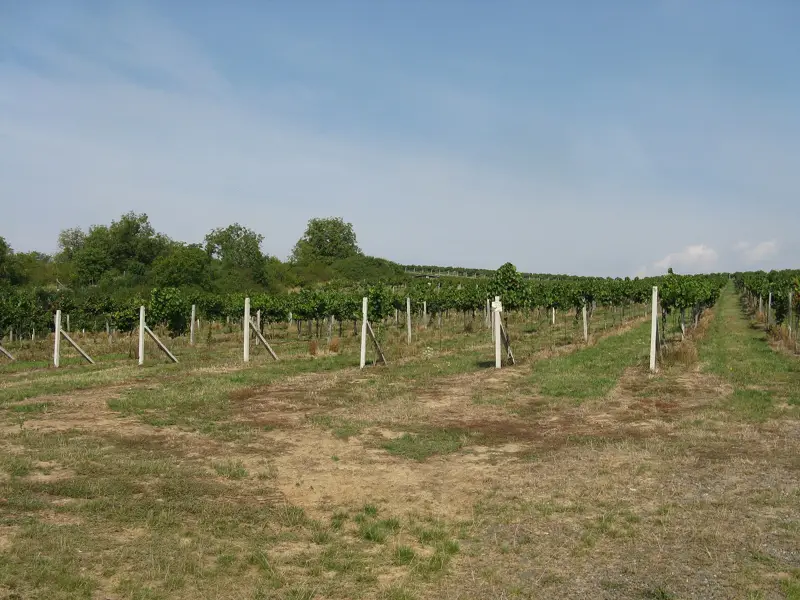
Photo: Slovak wine · Lubomir.borovic · Public domain