We may earn a commission when you book through links on this page, at no extra cost to you. Read our affiliate disclosure.
- Official language
- Slovak
- English in Bratislava
- Common among younger people
- Hungarian minority
- About 8% of the population
- Helpful words
- Dobrý deň, ďakujem
Yes, English is widely spoken in Bratislava and in tourist areas such as the High Tatras, especially among people under 40. Hotels, museums, restaurants in the Old Town and ticket offices at main stations usually manage in English. Outside the cities, expect less English and more Slovak, German or gestures.
The official language is Slovak. Czech is understood by most Slovaks, and Hungarian is spoken by a sizeable minority in the south. This guide shows where English works, where it does not and which words to learn. For a longer list, see Slovak phrases for travellers and the Slovak phrasebook tool.
Some links are affiliate links. Taply may earn a commission at no extra cost to you.
Top picks at a glance
Key takeaways
- English is easy in Bratislava, Košice and the main Tatras resorts.
- Small villages, rural shops and some bus drivers speak little English.
- Slovak is the official language; Czech is widely understood and German is common among older people.
- A translation app and five Slovak phrases solve most situations.
Best ways to get by in English in Slovakia, ranked
Ranked by how well each option fits this trip: convenience, cost and who it suits. Some options are affiliate partners. How we rank
-
Our top pick1
Airalo eSIM for translation apps
Best overallBest for: Non-EU visitors
Mobile data lets you use translation and map apps instantly. An eSIM avoids roaming bills if your plan does not include the EU. Check coverage and data plans before you buy.
Get an Airalo eSIM Read our Airalo review- Instant data
- Works with translation apps
- Needs an eSIM-compatible phone
-
2
English-language tours on Klook
Best for guided helpBest for: First-timers
Klook lists tours in Bratislava and other cities in English, so you can see the sights with a guide and avoid language issues.
See tours on Klook Read our Klook review- Guide in English
- Easy booking
- Fixed times
-
3
Audio guide on WeGoTrip
Best own paceBest for: Independent visitors
An English audio tour lets you explore at your own pace, with commentary on the sights.
See audio tours on WeGoTrip Read our WeGoTrip review- Own pace
- English commentary
- Needs headphones
-
4
Offline translation app
CheapestBest for: Budget travellers
Download Slovak for offline use before you travel. It handles menus and signs without data.
- Free options
- Works offline
- Imperfect translations
Where English works well
In Bratislava you will find English at almost every hotel, tour desk, museum and Old Town restaurant, and many menus have an English version. Young staff in bars, cafes and shops are used to tourists. The same is true in Košice, in the High Tatras resorts and at the main castles. If you are on a city trip, you can get by without Slovak. See Bratislava and the High Tatras.
Where English is less common
In villages, small shops, local pubs and many public offices, English is limited. Older people may speak German or Russian rather than English, a result of history. Some bus drivers and station clerks in smaller towns will only speak Slovak. Planning ahead helps: buy train tickets online, screenshot timetables and carry addresses written down. See how to buy train tickets in Slovakia.
Other languages that help
| Language | Who speaks it | Useful for |
|---|---|---|
| Slovak | Everyone | All signs and menus |
| English | Younger people, tourism staff | Cities and resorts |
| German | Many older people, some tourism staff | Tatras and Bratislava |
| Czech | Understood by most Slovaks | Easy contact if you speak it |
| Hungarian | Minority in the south | Southern towns |
Hungarians make up around 8% of the population, mostly in the south.
Six phrases worth learning
- Dobrý deň (good day), hello.
- Ďakujem, thank you.
- Prosím, please or you are welcome.
- Dobrú chuť, enjoy your meal.
- Na zdravie, cheers.
- Hovoríte po anglicky?, do you speak English?
Asking in Slovak before switching to English is appreciated. For pronunciation and more words, see our phrase guide.
Signs, menus and tickets
Tourist information centres and major attractions have English signs. Menus outside the centre may only be in Slovak. Look for words such as "polievka" (soup), "hlavné jedlo" (main dish) and "dezert". Slovak dishes are explained in Slovak food to try. For rail tickets, the ZSSK site and app have an English option.
Practical tips
- Download an offline Slovak pack in a translation app before you arrive.
- Write your hotel address in Slovak on your phone for taxi drivers.
- Speak slowly and simply, and avoid slang.
- Buy data or an eSIM before travelling, see eSIM for Slovakia.
- Ask for the menu in English: "Máte jedálny lístok v angličtine?"
English in specific situations
At airports, the main train stations and big hotels, staff speak English. In supermarkets the checkout staff may speak little English, but the process is simple and card payment is common. In pharmacies, many staff speak some English, and pharmacists can recommend over-the-counter medicine. At restaurants, ask for the menu in English and use pointing when needed. If a taxi driver does not speak English, show the address on your phone, or use a ride app that handles destination, see taxis and ride-hailing in Bratislava.
In emergencies, call 112. Operators are used to calls in English and can transfer you to the right service.
Why English is spreading
English is taught in schools from an early age, and Slovak television and online media include a lot of English-language content. The younger generation also uses English for work and gaming. German was the first foreign language for many older Slovaks, and Russian was taught widely before 1989. This is why age is the best clue: with someone under 30, start in English; with someone over 60, try German or simple Slovak. See Slovak history for travellers for context on the languages in the country.
Tips for being understood
Speak slowly and use short sentences. Say the key word first, for example "Ticket, Poprad, one adult". Use numbers and written notes for times and prices. Be patient and smile, and thank people in Slovak. Locals respond well to even a poor attempt. The phrasebook tool is a quick way to save the words you need on your phone.
English by region
| Region | English level | Note |
|---|---|---|
| Bratislava | Widespread | Easy in the centre |
| High Tatras | Common in tourism | Huts may be limited |
| Košice | Good in the centre | Slovak outside it |
| Villages and rural east | Limited | Learn basics |
| Southern border towns | Mixed | Hungarian is common |
This is a general guide, not a measurement, so treat it as a rule of thumb.
Using Slovak politely
Slovaks greet with "dobrý deň" when entering a shop, waiting room or small restaurant, and say "dovidenia" (goodbye) when leaving. This habit is expected, and omitting it can seem curt. The formal "vy" is used with strangers, but as a visitor you will be forgiven for mistakes. At the table, "dobrú chuť" is said before eating. When you pay, "ďakujem" and "prosím" cover most needs. Read tipping in Slovakia for the end of the meal.
Reading and writing
Written English is easier than spoken English. Many tourist leaflets, museum labels and booking sites offer English, and menus in the centre often include a translation. For official forms, such as at a clinic or police station, a staff member may need to find a colleague who speaks English, so allow extra time and bring your documents. A phone camera translation feature handles signs well.
Frequently asked questions
Do people speak English in Bratislava?
Yes. Most hotel, restaurant and attraction staff in Bratislava speak English, and younger residents are generally comfortable with it.
Do I need to speak Slovak to visit Slovakia?
No. You can travel in the main cities and resorts in English. A few Slovak words are appreciated and help in villages.
Is English spoken in the High Tatras?
Yes, at hotels, cable cars and resorts. Mountain huts and small shops may have limited English, so a few phrases help.
Do Slovaks understand Czech?
Yes, most do, because the languages are very close and Czech media is common. Slovak and Czech are largely mutually intelligible.
Is German useful in Slovakia?
It can be, especially with older people and in Bratislava and Tatras tourism. English is more useful with younger people.
What is hello in Slovak?
Dobrý deň is the standard hello, and ahoj is informal for friends.
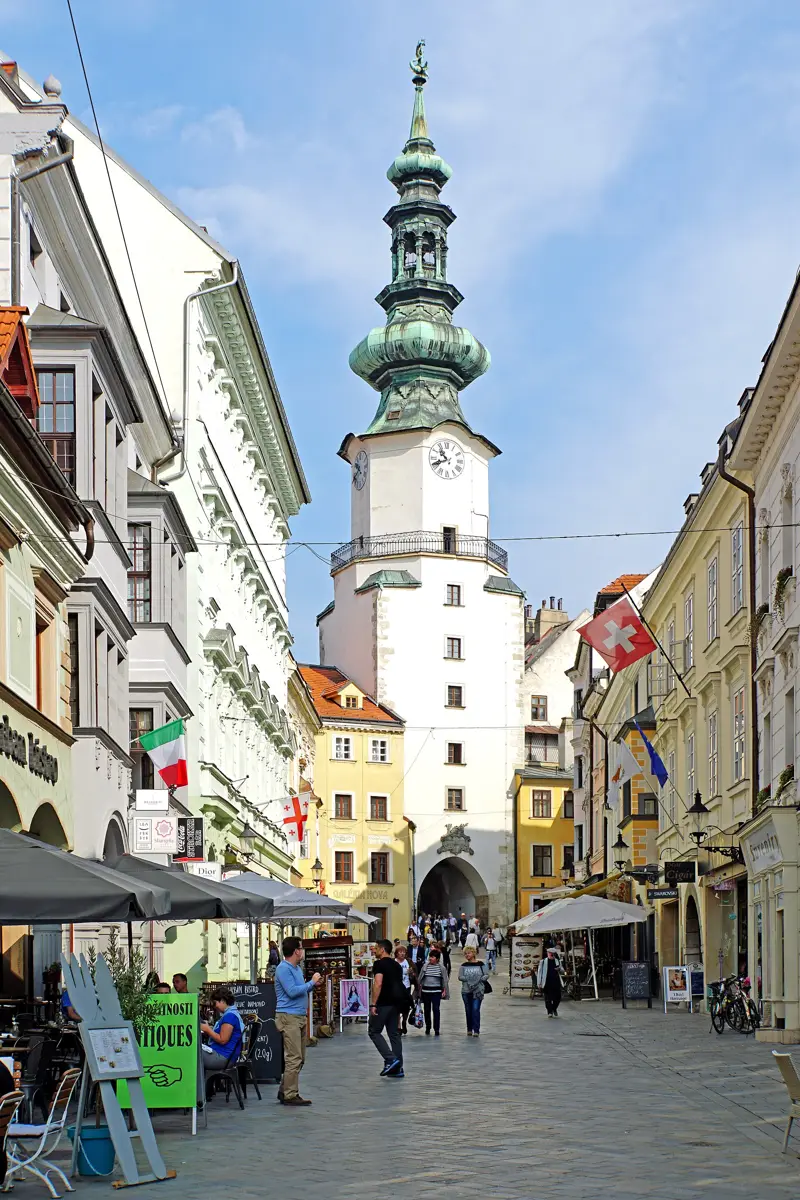
Photo: Michael's Gate · Dennis G. Jarvis · CC BY-SA 2.0