We may earn a commission when you book through links on this page, at no extra cost to you. Learn more.
The most comfortable way to get from Budapest to Bratislava is a private transfer booked through GetTransfer, where local drivers compete with offers for your exact route and date. The journey is about 200 km and takes around 2.5 hours by car. Trains and buses are cheaper, and both are good options if you travel light.
Both cities sit on the Danube and are linked by direct trains, coaches and a busy motorway. Hungary and Slovakia are both in Schengen, so you will not queue at a border.
Here are the options ranked, with notes on tickets, luggage and how to choose.
Top picks at a glance
Key takeaways
- The distance is about 200 km and the trip takes roughly 2.5 hours by car, bus or direct train.
- A private transfer gives door-to-door service and is cost-effective for groups of three or four.
- Direct trains run between Budapest and Bratislava, but check current timetables as they change.
- Coaches are often the cheapest option and run several times a day.
- Hungary uses the forint, Slovakia the euro, so keep that in mind for snacks and tolls.
Best ways to get from Budapest to Bratislava, ranked
-
Our top pick1
Private transfer via GetTransfer
Best overallBest for: Groups and comfort seekers
GetTransfer lets you describe your trip and receive offers from local drivers, so you can compare price and vehicle type for the Budapest to Bratislava run. It is the easiest way to travel door to door with luggage.
Get offers on GetTransfer- Compare several offers
- Door to door
- Good for groups and bikes or large bags
- More expensive than a coach
- Takes a few minutes to choose an offer
-
2
Direct train
Most relaxedBest for: Solo travellers and couples
Direct trains link Budapest with Bratislava and take roughly 2.5 hours. You get space to stretch, a bathroom and no traffic. Check the current timetable and book seats in advance in summer.
Official website- No traffic
- City centre to city centre
- Room for luggage
- Fixed schedule
- Popular trains can sell out
-
3
Private transfer with Kiwitaxi
Fixed priceBest for: Airport to hotel runs
Kiwitaxi offers private transfers between cities, and you can pre-book Budapest to Bratislava with a set price. The driver meets you at your address or at the airport.
Book a transfer on Kiwitaxi- Pre-paid and fixed price
- Meets you at an address or airport
- Several car classes
- Higher cost than public transport
-
4
Intercity coach
CheapestBest for: Tight budgets
Coach operators run frequent Budapest to Bratislava services at low prices. Journey time is similar to a car, around 2.5 hours. Check the operator for exact stops.
Official website- Low fares
- Many departures
- Online booking
- Stations can be outside the centre
- Traffic delays
-
5
Book on intui.travel
Alternative transferBest for: Comparing prices
intui.travel is another place to book private transfers online. It can be worth comparing for the same date, especially at off-peak times or for larger groups.
Book on intui.travel- Online booking
- Option to compare with other providers
- Availability depends on date
Distance and journey time
The two capitals are about 200 km apart and the motorway connection is direct. Allow roughly 2.5 hours door to door in a car, more if you hit holiday traffic around the Hungarian border or at the edges of Budapest. Trains and coaches take about the same time. For a rest stop or a different route, consider a drive in your own car, see car rental in Slovakia.
Train or transfer: which is better?
If you travel alone and like a quiet seat, the train is a pleasant choice. If you travel in a group, have lots of luggage, arrive late or want to start from an airport, a private transfer is simpler. Compare the total price for everyone, not the ticket for one person. A car for four can be close to four train tickets.
| Option | Time | Best for |
|---|---|---|
| Private transfer | About 2.5 hours | Door to door, groups |
| Train | About 2.5 hours | Comfort, no traffic |
| Coach | About 2.5 hours | Lowest cost |
Crossing the border
Hungary and Slovakia are both Schengen members, so there are no routine checks. Carry a passport or national ID card anyway. Non-EU travellers should check their own entry rules. If you drive, note that motorway rules and toll systems differ between the two countries, so confirm them for your rental before you leave. See driving in Slovakia for the basics.
Money and tickets
Slovakia uses the euro, while Hungary uses the forint. Cards are accepted almost everywhere in Bratislava, but a few euros in cash help at small kiosks. Book trains and coaches online and keep the confirmation on your phone. Prices vary a lot by date, so check current fares before you decide.
What to do when you arrive
Bratislava is compact. Drop your luggage at the hotel or at a storage point, see luggage storage in Bratislava, then walk the old town. Our Bratislava in one day plan is a good start, and Bratislava Castle is the main landmark above the Danube.
Continuing from Bratislava
Many travellers combine Budapest, Bratislava and Vienna in one trip. From Bratislava it is about an hour to Vienna, see Bratislava to Vienna, and a longer ride to the mountains, see Bratislava to the High Tatras.
Frequently asked questions
How long is the journey from Budapest to Bratislava?
About 2.5 hours by car, direct train or coach, depending on traffic and the route.
Is there a direct train from Budapest to Bratislava?
Yes, direct trains run between the two cities. Timetables change, so check the current schedule before booking.
What is the cheapest way from Budapest to Bratislava?
Coaches and advance train tickets are usually the cheapest. Book early and compare prices for your date.
Do I need a visa or passport check between Hungary and Slovakia?
Both are Schengen countries with no routine border checks. Carry a passport or ID card in case of spot checks.
Can I do Budapest to Bratislava as a day trip?
Yes, it is possible, but 5 hours of travel in total leaves limited time. A one-night stay works better.
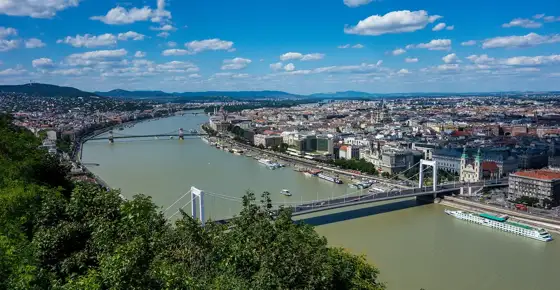
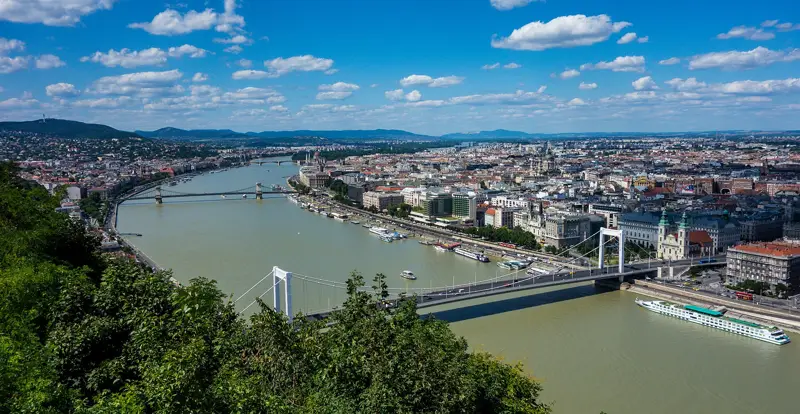
Photo: Budapest · Visions of Domino · CC BY 2.0