We may earn a commission when you book through links on this page, at no extra cost to you. Read our affiliate disclosure.
- Total length
- About 5.1 km
- Discovered
- 3 October 1926
- UNESCO
- Listed 1995 (Aggtelek and Slovak Karst)
- Visit
- Guided tour, cool and damp
Domica is a limestone show cave in Slovak Karst National Park, about 5.1 km long in total, and the easiest way to reach it from Košice is by rental car, which you can compare on Qeeq. It is part of the cave system that continues across the border into Hungary as the Baradla cave, and it belongs to the UNESCO site Caves of Aggtelek Karst and Slovak Karst.
Visitors walk only a section of the passages, on a guided tour run by the Slovak Caves Administration. The cave is cool and humid all year, so a jacket matters more than the weather outside.
This page covers what the cave is, how to plan the visit and how to fit it into a trip from Košice. For the park as a whole read Slovak Karst.
Top picks at a glance
Key takeaways
- Domica is about 5,140 m long, with roughly 1.6 km of passages historically open to visitors.
- It was found on 3 October 1926 and has been open to visitors since 1932.
- Visits are guided, seasonal and weather independent underground, so dress for a cool cave.
- A car from Košice or Rožňava is the practical way to get there.
Best ways to get to Domica Cave, ranked
Ranked by how well each option fits this trip: convenience, cost and who it suits. Some options are affiliate partners. How we rank
-
Our top pick1
Rental car with Qeeq
Best overallBest for: Independent travellers and small groups
Domica lies in the south of the park near the Hungarian border, far from railway stations. A car lets you pair it with Ochtinská Cave, Zádiel Gorge and Rožňava. Qeeq lets you compare car hire offers, so check the deposit, insurance cover and fuel policy before you book.
Compare cars on QEEQ Read our QEEQ review- Your own schedule
- Easy to combine with nearby sights
- No timetable to plan around
- Rental cost and deposit
- Rural roads need daylight and care
-
2
Private transfer with Kiwitaxi
Most comfortableBest for: Families and groups
Kiwitaxi arranges private transfers between cities. From Košice, ask for a quote for a return trip and whether the driver can wait while you visit.
Book a transfer on Kiwitaxi Read our Kiwitaxi review- No driving
- Price agreed in advance
- Costs more than public transport
- Ask whether waiting time is included
-
3
Cover for caves and hiking with EKTA
Cover for tripsBest for: Active travellers
EKTA sells travel insurance. Cave floors can be wet and uneven, so compare medical cover and activity rules before you travel.
Get a quote from EKTA Read our EKTA review- Cover set up before you leave
- Check that your activity is covered
-
4
Guided tours on Klook
Best for guided visitsBest for: Visitors who prefer a guide
Klook lists guided day trips across Europe. Check whether a tour covering this area is listed for your dates and what the price includes.
See tours on Klook Read our Klook review- Context from a guide
- Planning done for you
- Availability varies by date
- Fixed schedule
-
5
Train and bus (ZSSK)
CheapestBest for: Budget travellers with time
Regional trains and buses serve the towns nearby, but the last stretch is thin. Check the schedule both ways before you commit.
Official website- Low fares
- Slower and less flexible
What Domica is
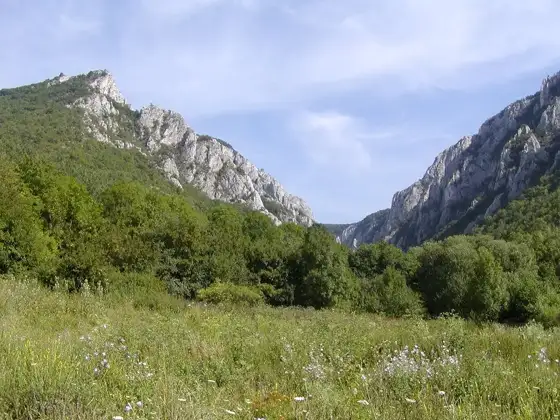
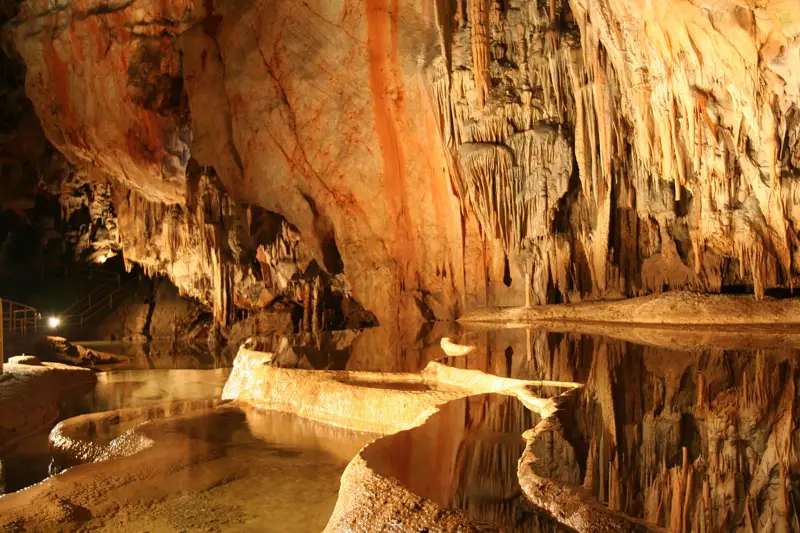
Domica sits on the Silická planina plateau in the Rožňava District of the Košice Region, around 10 km south-east of Plešivec. Together with Baradla cave in Hungary it forms the main section of the Aggtelek and Slovak Karst cave network. Underground streams, including the river Styx, shaped the passages over a very long time, and the cave is known for dense decoration with dripstone formations.
The cave is also a Ramsar wetland, designated in 2001, which reflects the importance of its underground waters. UNESCO listed it in 1995 as part of the shared Slovak and Hungarian site, with extensions in 2000 and 2008.
History in brief
Ján Majko found the way into the system on 3 October 1926, after he confirmed that several nearby caves were connected, and he entered through a deep abyss. The cave opened to visitors in 1932. Today it is among the thirteen show caves run by the Slovak Caves Administration, and the public section is only a part of the total length.
Domica at a glance
| Question | Answer |
|---|---|
| Length | About 5,140 m in total |
| Public section | Roughly 1.6 km of passages |
| Border link | Continues into Baradla cave in Hungary |
| Operator | Slovak Caves Administration (ssj.sk) |
| Typical visit | Guided group tour, cool and humid |
What you see underground
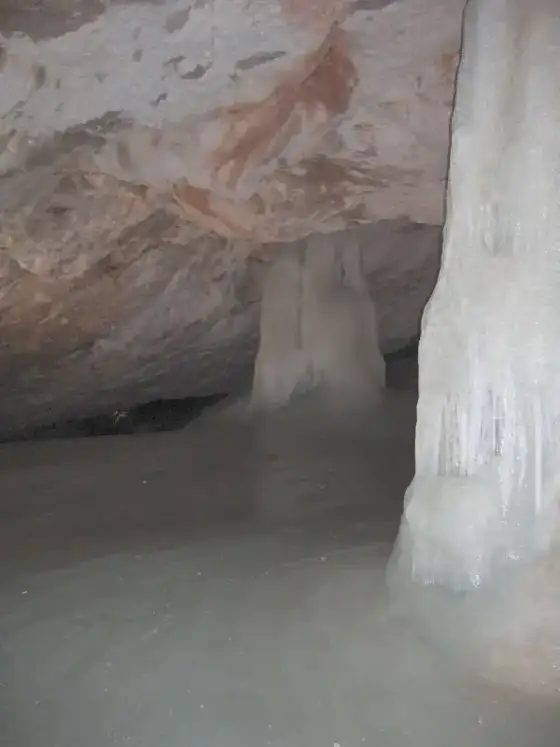
The tour passes through halls and galleries where dripstone has built columns, curtains and stalagmites over long periods. Because the cave belongs to an underground river system, you may notice damp walls, water-worn passages and echoing spaces. The guide explains how the water carved the cave and how the formations grew, usually in Slovak with other languages depending on the group, so ask at the ticket desk about language options.
Light is kept low to protect the cave and its wildlife, and the path is marked. Keep your hands off the walls, since skin oils harm the formations, and stay with the group, because the cave extends far beyond the public route.
How to get there
Domica is in the south-east corner of the country. From Košice allow roughly one and a half hours or more by car, depending on the route and traffic. Public transport reaches Plešivec and Rožňava, but the last kilometres to the entrance are the hard part, so check connections both ways or book a taxi or transfer. See car rental in Košice and driving in Slovakia.
Season, tours and tickets
Show caves in Slovakia run on seasonal schedules and tours leave at set times, so check the opening page on ssj.sk for the dates you plan. Some caves close for part of the year or for maintenance, and tour times can change. Bring cash as well as a card, because card payment is sometimes unavailable. Since 1 January 2026 photo and video fees are waived on regular tours, but the tour does not get longer, so follow the guide and keep up with the group.
What to wear and bring
| Item | Why |
|---|---|
| Warm jacket | The cave is cool and damp, whatever the season |
| Shoes with grip | Wet steps and uneven floors |
| Small bag | Large backpacks are awkward in narrow passages |
| Cash and card | Payment methods vary |
| Phone with night mode | Light is low and guides ask you to follow the group |
Is it right for you?
The tour needs reasonable fitness. The official caves site warns that visits involve a longer walk in an enclosed dark space, lower temperature and higher humidity, plus ascents, descents and steps. People with heart or breathing problems, high blood pressure or limited mobility should think carefully and consult a doctor if unsure. Children who like adventure often enjoy it, but they need warm clothes too.
Combine Domica with other stops
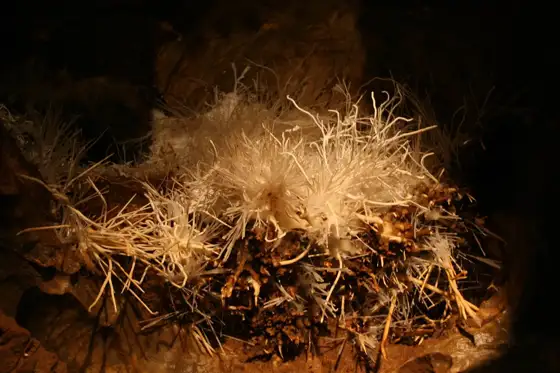
A natural pairing is Ochtinská Aragonite Cave, a very different cave with white aragonite crystals. Add Zádiel Gorge for an outdoor walk and Krásna Hôrka Castle for history. If you are heading north next, Dobšiná Ice Cave and Slovak Paradise make a longer eastern loop. More caves are listed in caves in Slovakia.
Planning a day
- Check the opening and tour times for Domica on the official site.
- Leave Košice early and pack a warm layer.
- Arrive before the tour, buy a ticket and join the group.
- After the tour, have lunch in Rožňava or a nearby village.
- Use the afternoon for a second cave or a plateau walk.
Common mistakes
- Dressing for the summer weather outside instead of the cool cave.
- Arriving without checking the season, then finding the tour schedule does not match your day.
- Wearing smooth-soled shoes on wet steps.
- Planning too many stops, since village roads are slower than a map suggests.
- Relying on a card only, when cash may be needed.
Allow a relaxed day and keep one stop in reserve. If the cave is closed on the day you arrive, the nearby plateau walks and the other park sights in Slovak Karst make a good plan B. A weekday visit in the shoulder season is usually calmer than a summer weekend, and best time to visit Slovakia explains the wider seasons.
Where to base yourself
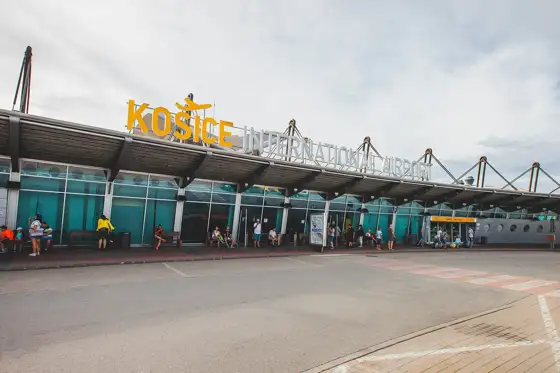
Most visitors stay in Rožňava or in Košice and drive out for the day. Rožňava is closer to the cave and puts you next to the other park sights, while Košice has more restaurants, a wider choice of hotels and an airport, see Košice airport to the city centre. Village guesthouses near the plateau suit travellers who want quiet evenings and an early start at the cave. Whatever you pick, book ahead in July and August, when domestic holidaymakers fill smaller places.
Frequently asked questions
How long is Domica Cave?
About 5,140 m in total. Visitors walk only a part of it on a guided tour.
Is Domica a UNESCO site?
Yes. It was listed in 1995 as part of the Caves of Aggtelek Karst and Slovak Karst, with extensions in 2000 and 2008.
Is Domica connected to Hungary?
Yes. It forms the main section of the cave network that continues as Baradla cave in Hungary.
How cold is it inside?
Cool and humid all year. Bring a jacket even in summer and shoes with grip.
Can I get there by public transport?
You can reach nearby towns such as Plešivec and Rožňava, but the last stretch is difficult, so a car or taxi is more practical.
Can I take photos?
The caves administration waived photo and video fees on regular tours from 1 January 2026. Follow the guide's instructions and check the current rules.
Photo: Domica · Jojo, en:Jojo_1, pl:Jojo · CC BY-SA 3.0