We may earn a commission when you book through links on this page, at no extra cost to you. Read our affiliate disclosure.
- Distance
- roughly 200 km
- Journey
- about 2 to 2.5 hours
- Currency
- forint vs euro
- Budapest population
- about 1.7 million
Diesen Reiseführer auf Deutsch lesen
Przeczytaj ten przewodnik po polsku
Přečtěte si tohoto průvodce česky
Olvassa el ezt az útmutatót magyarul
Choose Budapest for a bigger city with thermal baths, grand architecture and nightlife, and choose Bratislava for a compact, calm base. They are about 2 to 2.5 hours apart, so many travellers combine them. We put Klook first for guided trips, since Budapest rewards a tour for first-timers. The Klook review shows what the platform does well and where support gets criticised.
Budapest has about 1.7 million residents in the city proper and is known for natural thermal springs. Bratislava has about 480,000 residents and sits on the border of Austria and Hungary.
If you are choosing a single city, read on. For travel details between them, see Bratislava to Budapest.
Top picks at a glance
Key takeaways
- Budapest is larger, with baths, big monuments and nightlife.
- Bratislava is smaller, calmer and quick to see.
- The journey between them takes about 2 to 2.5 hours.
- Budapest uses the forint, Bratislava uses the euro.
- Do Budapest as an overnight rather than a rushed day trip.
Best ways to plan Bratislava and Budapest
Ranked by how well each option fits this trip: convenience, cost and who it suits. Some options are affiliate partners. How we rank
-
Our top pick1
Guided tours on Klook
Best for Budapest first-timersBest for: First-time visitors
Klook lists guided tours and activities. Check the language, the duration and what is included before booking, and look at the Bratislava to Budapest options.
See tours on Klook Read our Klook review- Plan handled
- Good for short stays
- Fixed time
-
2
Private transfer with Kiwitaxi
Best between citiesBest for: Families and groups
Kiwitaxi arranges private transfers between cities. Check the final price and the luggage allowance before you pay.
Book a transfer on Kiwitaxi Read our Kiwitaxi review- Door to door
- Good for groups
- Costs more than the train
-
3
Transfers on Welcome Pickups
Best for meet and greetBest for: Late arrivals
Welcome Pickups arranges transfers with a pickup arrangement. Confirm the details in your booking.
Book with Welcome Pickups Read our Welcome Pickups review- Prebooked driver
- Higher cost
-
4
Regional or EuroCity train
CheapestBest for: Budget travellers
Direct trains take roughly 2 hours 20 to 2 hours 40 minutes. Check current fares and times on the operator sites.
Official website- City centre to city centre
- Low cost
- Fixed times
-
5
Tickets on Tiqets
Best for entryBest for: Sightseers
Tiqets lists tickets for attractions. Use it for prebooked entry where you want to avoid queues.
See tickets on Tiqets Read our Tiqets review- Mobile tickets
- Not all venues listed
Side by side
| Factor | Bratislava | Budapest |
|---|---|---|
| Size | About 480,000 | About 1.7 million |
| Currency | Euro | Hungarian forint |
| Signature draw | Old Town, castle, Danube | Baths, Parliament, castle quarter |
| Nightlife | Small and relaxed | Large and varied |
| Time needed | 1 to 2 days | 2 to 4 days |
| Pace | Calm | Busy |
Atmosphere and sights
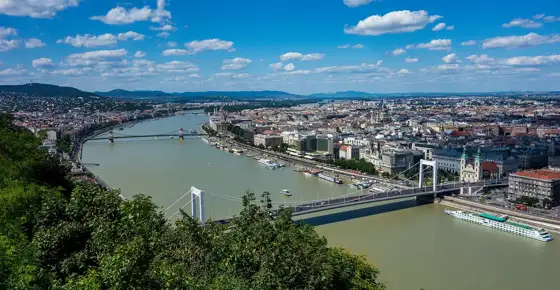
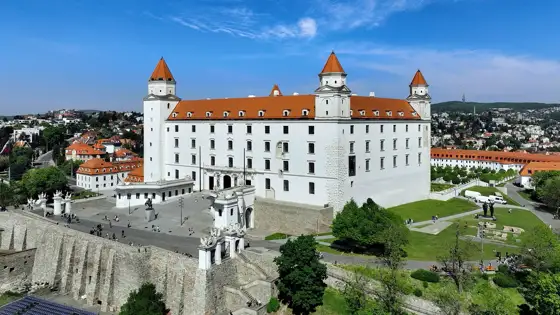
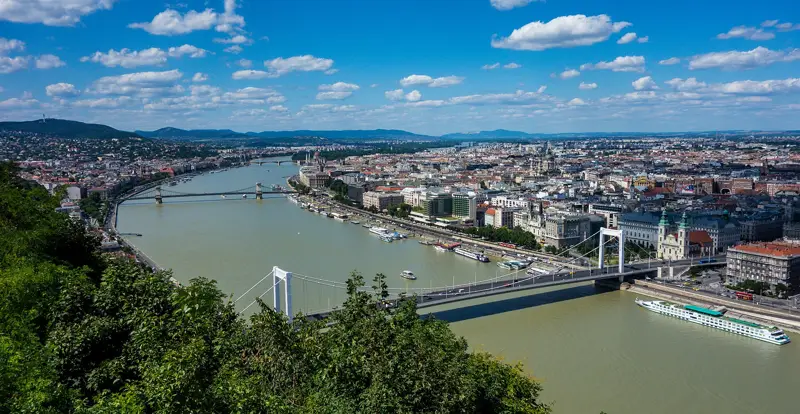
Budapest is split by the Danube into hilly Buda and flat Pest. Its Danube banks, Buda Castle Quarter and Andrássy Avenue are on the UNESCO list. Bratislava's highlights are smaller: the castle, Old Town and Blue Church. See things to do in Bratislava.
Both cities sit on the Danube. See Danube boat trips from Bratislava for a river view.
How the two cities feel on the ground
Budapest is a big capital. The historic centre along the Danube is a UNESCO World Heritage Site, and the city has the first underground line on the European continent, opened in 1896 and now the M1. Getting around means using trams, metro and buses, and a first visit usually involves some planning around the river, which splits the city into Buda and Pest.
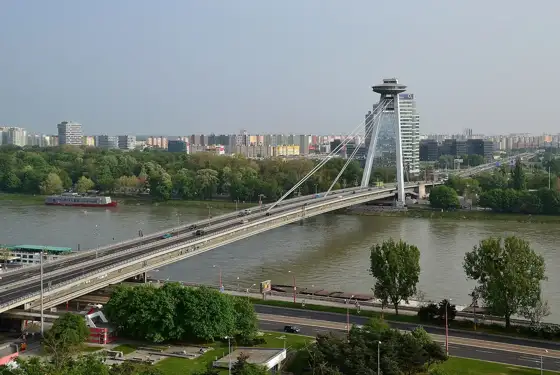
Bratislava is small enough that the main sights sit within a short walk of each other. The Old Town is largely pedestrian, and the castle is a climb rather than a transport project. You will spend less time moving around and more time sitting in cafes. For local transport details, see Bratislava public transport.
The trade-off is depth. Budapest can fill a week without repeating itself. Bratislava gives a good impression in a day or two, and after that you are mostly using it as a base for trips out of town, for example day trips from Bratislava.
Baths, food and drink
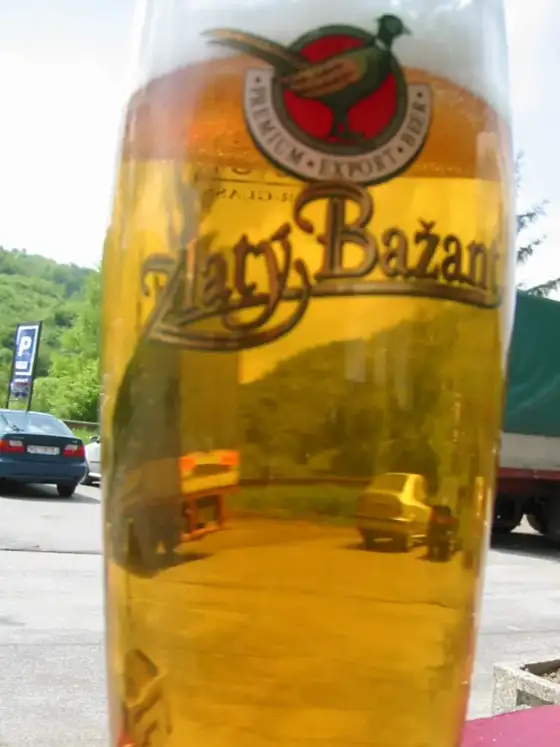
Budapest is one of only three world capitals with natural thermal springs. That makes baths a major reason to go. Bratislava's draw is food, wine and beer. See Bratislava food and drink and wine tasting. Our guide to Slovakian beer lists the brands and where to find them.
Cost and money
Hungary uses the forint, so withdraw or pay by card and check exchange rates. Slovakia uses the euro. Prices change, so compare current hotel and food costs rather than relying on a general rule.
A practical point is that the euro makes Bratislava simple if you already carry euros, while Budapest means a second currency. Cards are widely accepted in both cities. When a terminal offers to charge you in your home currency, choose the local currency instead, because the conversion rate offered at the till is usually worse than your bank's. Budapest also has a lot of choice at the top end, such as spa days and river dinners, so its total spend depends heavily on what you add. Bratislava has fewer paid extras, so a basic trip tends to be easier to keep under control.
See Slovakia travel cost for a Slovak baseline and Bratislava on a budget for ways to save.
Getting between them
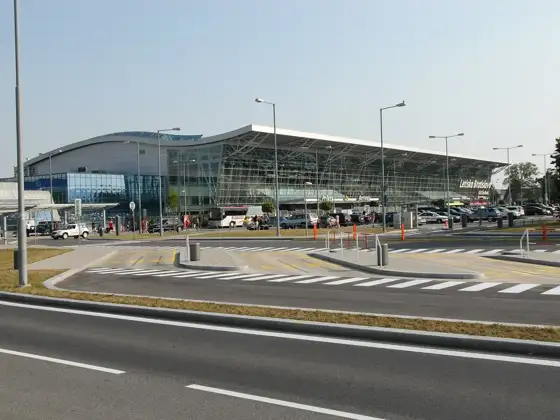
The route takes about 2 to 2.5 hours by train, coach or car. Read Budapest to Bratislava and the Budapest day trip guide. For flights, see Budapest Airport to Bratislava.
Our verdict
- Nightlife and baths: Budapest.
- Quiet weekend: Bratislava.
- Both: Bratislava first, then Budapest overnight.
- Budget: compare current prices.
Who each city suits
Budapest suits travellers who want a full city experience: a thermal bath morning, a walk across the river and a late evening in a lively district. It rewards at least two nights, and three if you want to visit more than the headline sights.
Bratislava suits travellers who want an easy introduction to Slovakia, with a walkable centre, a castle and a calm pace. It also works as a stopover on the way between Vienna and Budapest. See Bratislava in two days for a plan.
If you travel by train, remember that both cities have main stations close to the centre, which makes luggage easier. If you are driving, check parking and vignette rules in each country, since they differ.
Mistakes to avoid
- Doing Budapest as a rushed day trip with a late return.
- Arriving without any forint or a card that works abroad.
- Not checking the last train back to Bratislava.
- Expecting Bratislava to match Budapest's nightlife.
Which city for which kind of trip
| Trip type | Better pick | Reason |
|---|---|---|
| First big city break in Central Europe | Budapest | More sights, baths and evening life |
| Short stopover between Vienna and Budapest | Bratislava | Sits on the route and is quick to see |
| Couples after a slow weekend | Either | Budapest for baths, Bratislava for calm and wine |
| Travellers with young children | Bratislava | Short distances and an easier pace; see Bratislava with kids |
| Group celebrating a birthday or stag weekend | Budapest | Much larger bar scene; see Bratislava stag weekend for the smaller option |
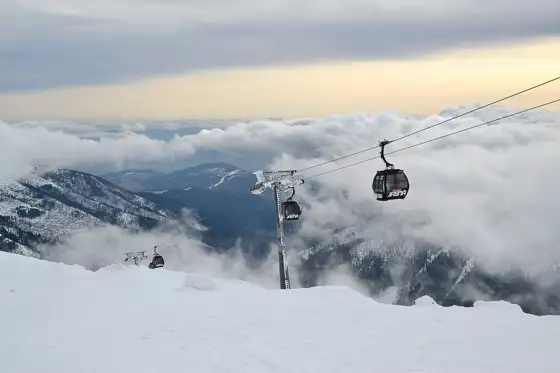
| Using Slovakia as a base for mountains | Bratislava | Closer to Slovak rail routes; see Bratislava to the High Tatras |
Seasonal notes
Both cities are at their easiest in spring and early autumn, when walking is comfortable. Summer can be hot in the Danube basin, which suits river walks and boat trips but makes long sightseeing days tiring. In winter, outdoor sightseeing is colder, which is when Budapest's thermal baths are a strong draw, and when Bratislava's Old Town fills with Christmas market stalls. See Bratislava Christmas markets. Opening hours and bath rules change by season, so check official sites before building a day around a single venue.
Combining both in one trip
- Start in Bratislava for one or two nights, and use the first full day for the Old Town and castle.
- Take a train, coach or car to Budapest and keep the transfer day light.
- Spend at least two nights in Budapest so the baths and the river area do not feel rushed.
- If you arrive by air in Vienna first, Bratislava is the natural first stop; see Bratislava stopover.
Book transport in advance if you are travelling on a Friday or Sunday, since those days are common for weekend trips. Check the last departure back if you decide to go for a day.
Frequently asked questions
Is Budapest better than Bratislava?
Budapest is bigger with more to do, Bratislava is calmer and quicker to see.
How far is Bratislava from Budapest?
Roughly 200 km, about 2 to 2.5 hours by train, coach or car.
Is Bratislava cheaper than Budapest?
It varies by item and season, so check current prices.
Which currency do I need?
Euro in Slovakia, Hungarian forint in Hungary.
Can I visit both in one trip?
Yes. Many travellers go to Bratislava first and then travel to Budapest.
How many days do I need for Bratislava and Budapest together?
A comfortable plan is one to two nights in Bratislava and two to three nights in Budapest, plus a light travel day between them.
Is Budapest worth a day trip from Bratislava?
It is possible, but the journey takes about 2 to 2.5 hours each way, so an overnight stay gives a much better visit.
Photo: Budapest · Visions of Domino · CC BY 2.0