We may earn a commission when you book through links on this page, at no extra cost to you. Read our affiliate disclosure.
- Lake elevation
- About 1,395 m
- Max depth
- 50.8 m
- Border crossing
- Lysá Poľana, Slovakia to Poland
- Last stretch
- Walk, about 2 hours, or horse cart
You reach Morskie Oko from Slovakia by driving or taking a transfer over the Lysá Poľana border crossing to the Palenica Białczańska car park in Poland, then walking about two hours or taking a horse-drawn cart up the road. Taply ranks a private transfer with Kiwitaxi first for most visitors, since public connections from the Slovak resorts are limited and the day is easier with a fixed pickup.
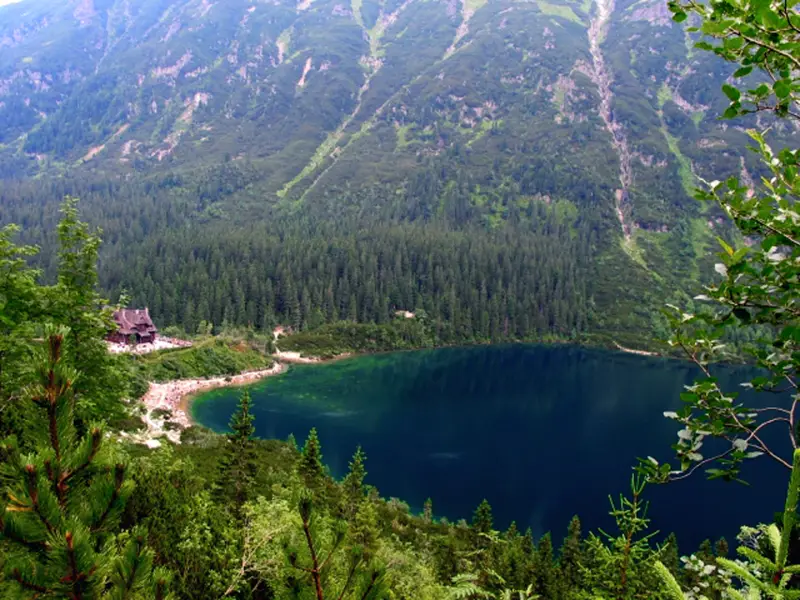
Morskie Oko is the largest and one of the deepest lakes in the Tatras, at about 1,395 m, with a maximum depth of 50.8 m. It lies in the Polish Tatra National Park, so Polish park rules and fees apply, not Slovak ones. Both countries are in the Schengen area, so the crossing at Lysá Poľana is normally an ordinary road border without routine checks, but carry your passport or ID.
This guide gives the route, the walk versus cart choice, what to check about fees and the practical limits of a day trip. For the Slovak side of the range, see the High Tatras guide.
Top picks at a glance
Key takeaways
- Drive via Lysá Poľana to Palenica Białczańska, then walk about two hours or ride a horse cart.
- Morskie Oko is in Poland, so the Polish national park's ticket rules apply. Check tpn.gov.pl for current fees.
- Swimming in the lake is banned, and the area can be very crowded in summer.
- Part of the route lies in an avalanche zone in winter.
- Mountain rescue in Slovakia is 18 300, and 112 works across the EU.
Best ways to reach Morskie Oko from Slovakia, ranked
Ranked by how well each option fits this trip: convenience, cost and who it suits. Some options are affiliate partners. How we rank
-
Our top pick1
Private transfer with Kiwitaxi
Best overallBest for: Families and groups
Kiwitaxi offers private transfers between cities and airports. A booked car from the Slovak Tatra resorts or Poprad to the Polish side gives a door-to-car-park run without parking stress.
Book a transfer on Kiwitaxi Read our Kiwitaxi review- Handles the border drive
- Fixed return time
- Costs more than a bus
-
2
Rental car with QEEQ
Best for flexibilityBest for: Drivers
QEEQ is a car rental comparison site. Check that the rental terms allow driving into Poland, then drive to Palenica Białczańska early to find parking.
Compare cars on QEEQ Read our QEEQ review- Leave when you want
- Combine with Zakopane
- Parking fills early in season
-
3
Hiking insurance with EKTA
Best for safetyBest for: Walkers who continue to Czarny Staw
The walk is gentle, but the lake sits in alpine terrain. EKTA is an option to check for travel cover, especially if you add trails above the lake.
Get a quote from EKTA Read our EKTA review- Online purchase
- Useful for add-on hikes
- Check that cover applies in Poland
-
4
Public bus and minibus from Zakopane
CheapestBest for: Budget travellers
Buses and minibuses run from Zakopane towards the trailhead in season. The route from Slovakia then needs a connection via Zakopane, so it suits those already staying in Poland.
- Low cost
- No parking
- Longer journey from Slovakia
The route from Slovakia
The usual road route leaves the Slovak Tatra resorts, crosses the Slovak-Polish border at Lysá Poľana (Łysa Polana in Polish) and continues to the Palenica Białczańska car park at the start of the lake road. Both countries belong to Schengen, so there is normally no stop, but carry ID. From Tatranská Lomnica or Poprad allow a long morning drive rather than a quick hop, and use a navigation app for the current time and road conditions.
| Option | Effort | Cost | Best for |
|---|---|---|---|
| Transfer to car park | Low | Check quote | Families, fixed schedule |
| Own or rental car | Medium | Fuel plus parking | Flexible days |
| Via Zakopane by bus | Medium to high | Low | Budget |
Walk or horse cart
Cars do not drive to the lake. From the road's end, walking takes about two hours, and the route is a wide path suitable for most fitness levels. Many visitors take a horse-drawn cart for part of the way instead, and some of the carts are run by local Górale residents. Cart prices and rules change, so confirm on arrival, and expect queues in July and August.
Dress for mountain weather, since the lake area can be cold and rainy even in summer. A hut by the shore, named after Stanisław Staszic, provides food and rest.
Fees and rules to check
The lake belongs to the Polish Tatra National Park, so you need that park's entrance ticket, which is bought online or at the gate. Prices, online purchase requirements and limits on visitor numbers are set by the Polish park and change, so check tpn.gov.pl before leaving Slovakia. Parking at Palenica Białczańska is also charged separately and fills early.
Swimming in the lake and feeding the trout are banned. Stay on marked paths.
Seasons and crowds
Summer is busy: the lake can receive more than 50,000 visitors in the holiday season, so arrive early. Late spring and early autumn are calmer. In winter, part of the route lies in an avalanche zone, so check local conditions. For crowd-free hikes on the Slovak side, see the best hikes in the High Tatras.
Going further
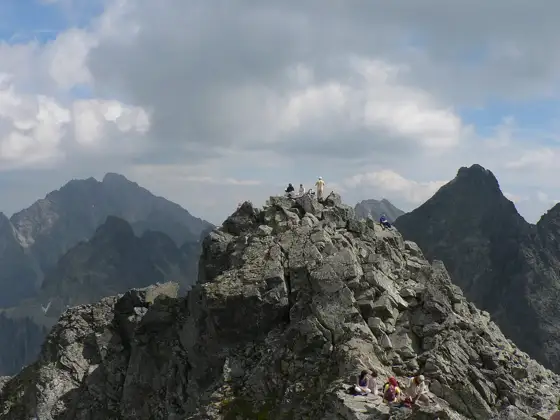
From the lake a trail climbs to Czarny Staw pod Rysami, and Rysy (about 2,499 m) rises roughly 1,000 m above the lake. Rysy can also be climbed from the Slovak side, as covered in the Rysy hike guide. If you base yourself in Poland for a night, Bratislava to Zakopane and Kraków to the High Tatras explain the other corridor.
A realistic day plan from the Slovak side
Leave the resort early, ideally before 7 a.m. in July and August, because the car park at Palenica Białczańska fills and the road to the lake becomes a slow stream of walkers and carts by mid-morning. Walk or ride up to the lake, spend an hour at the shore, and consider a hot drink at the hut. If you have energy, continue to Czarny Staw pod Rysami for a second lake view before heading back.
Plan the return so that you are at the car park before the evening traffic peaks. Carry your documents, euros or zloty for small purchases, and a rain jacket. Check which currency the carts, hut and car park accept, since Poland uses the złoty and card acceptance may vary.
One more planning point is the border drive itself. Fuel up in Slovakia, check that your insurance or rental agreement covers Poland, and keep the car papers in the vehicle. If you use a transfer, ask the driver to wait at the car park or to agree a precise return time, because mobile signal in the valley can be weak. Children and older walkers usually manage the road to the lake easily, but the walk is on hard surfaces, so wear shoes with cushioning and bring water, since prices at the shore are higher.
Take the weather into account when you choose the day. Mist can hide the lake and the surrounding peaks, while a clear morning after rain gives the sharpest reflections. Look at the forecast for both sides of the range, because conditions at the Slovak resort may differ from those at the Polish valley. A weekday outside school holidays is the quietest choice.
Is it worth the trip from Slovakia?
Yes if you want a famous lake and a mostly easy walk. The Slovak side has similar mountain lakes with fewer crowds, such as Popradské pleso and Zelené pleso, so the choice comes down to if you want the fame and the Polish side of the range. The lake has been drawing visitors for generations, and its name comes from a legend that it was linked to the sea by an underground passage.
If crowds bother you, go on a weekday outside school holidays or choose a Slovak lake instead. If you want to see Poland's side of the Tatras as part of a larger loop, Kraków to the High Tatras and Bratislava to Zakopane show the usual routes through Zakopane.
Frequently asked questions
Can you reach Morskie Oko from Slovakia?
Yes. Cross at Lysá Poľana, park or be dropped at Palenica Białczańska, then walk about two hours or take a horse cart.
Do I need a passport at the border?
Both Slovakia and Poland are in Schengen, so there are normally no routine checks, but carry your passport or ID.
Do I pay to enter the park?
Yes, the Polish Tatra National Park charges entry. Check tpn.gov.pl for current prices and online purchase rules.
How high is Morskie Oko?
The lake lies at about 1,395 m and is up to 50.8 m deep.
Can I swim in Morskie Oko?
No. Swimming and feeding the trout are banned.
Is it a good day trip from the Slovak Tatras?
Yes, if you start early. Plan for a long driving day, crowds in summer and a walk or cart ride each way.
Photo: Morskie Oko · Dixi · CC BY-SA 3.0